Hey everyone, if you’ve ever set up a tent in a light drizzle and watched those poles bend just a little too much, or snapped in a sudden gust of wind, you know how much those tiny parts matter. As a camping tent pole supplier, I get asked this question all the time: “What’s the bending strength of camping tent poles, really?” It’s not just a random number printed on a spec sheet—it’s the stuff that keeps you dry, safe, and not sleeping in a puddle. Let’s break this down like we’re chatting over a post-hike coffee, no jargon, just real stuff you need to know. Camping Tent Pole
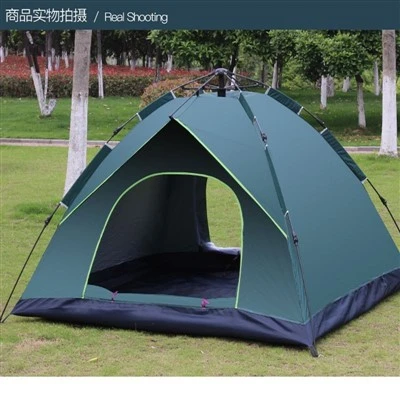
First off, let’s get one thing straight: bending strength (sometimes called flexural strength) isn’t a one-size-fits-all number. It depends on what the poles are made of, their diameter, their wall thickness, and even how they’re assembled. Most camping poles these days fall into two main materials: aluminum (the go-to for nearly all mid-range to premium tents) and fiberglass (the cheap, workhorse option for basic tents and backpacking setups). Let’s start with aluminum because that’s where most of our products sit, and it’s what most campers are actually using.
Aluminum poles come in different grades, right? The two big ones are 7000-series and 6000-series aluminum. 7000-series is stronger, lighter, and more corrosion-resistant—we use this for our high-end backpacking and 4-season tent poles. The bending strength for a typical 7000-series aluminum pole (let’s say 9.5mm diameter, 0.3mm wall thickness, super common for 3-season car camping tents) is around 350 to 400 Newtons. Wait, Newtons? Yeah, that’s the measurement for force—think of a Newton as roughly the weight of a small apple. So that pole can handle 350 to 400 small apples pressing down or bending it before it permanently deforms, or around 500 Newtons before it snaps entirely. For 6000-series aluminum, which is a bit more budget-friendly, that number drops to around 280 to 320 Newtons for permanent bend, and up to 450 for breaking. That makes sense—you get what you pay for here.
Now fiberglass poles: they’re heavier, stiffer but more brittle, so their bending strength is lower, usually around 150 to 250 Newtons before they start to bow permanently, and they snap way more easily if you push them too hard—like, they might not even hit 300 Newtons before breaking. That’s why fiberglass poles are great for fair weather, but if you’re hitting a place with unpredictable gusts or winter conditions, aluminum is non-negotiable.
But here’s the catch: those numbers are lab tests, right? In the real world, bending strength doesn’t work exactly the same. A tent pole isn’t just being pushed straight down; it’s under tension from the guy lines, it can catch a corner of a rock when you’re setting it up, or take the full force of a sudden wind gust from the side. For example, a 30 mph wind is roughly 70 Newtons per square meter of tent surface. A standard 3-season tent might have a surface area of 12 square meters, so that’s 840 Newtons total across all poles—wait, that’s more than the bending strength of a lot of lower-end aluminum poles! That’s why so many people bend poles in mild storms, not just hurricanes.
Another thing that affects bending strength is how the poles are put together. Most camping poles are telescopic, made of multiple segments that slide into each other. The joints are a weak point, not the pole itself. If a segment is too loose, it can wiggle under pressure, which makes the whole pole weaker—you might see a pole bow at the joint instead of bending along its length, even if the pole material itself is fine. That’s why we at our company design our poles with overlapping segments that lock tightly, so the load is spread evenly across the pole, not just at the joints.
I’ve had so many customers tell me, “My pole bent in a light rain storm, that’s garbage quality” and it’s usually not the pole’s bending strength at fault—it’s how it was assembled, or it’s a fake aluminum pole from a no-name brand that uses a cheap alloy with way lower strength. We test every batch of our poles ourselves to make sure they meet or exceed the numbers I mentioned. For example, we’ll take a random pole from a production run, clamp it at both ends, and apply force until it bends permanently, to make sure it’s above 360 Newtons for our 7000-series 9.5mm poles. That’s not just guessing—we do that because we’ve seen too many broken poles out in the wild.
Wait, let’s talk about how to actually test bending strength if you ever need to check your own tent poles (no lab equipment required, I promise). Grab a small scale that measures weight, like a digital kitchen scale. Clamp one end of the pole to a table edge, let it stick out 1 meter (that’s standard for most tent poles), then hang weights from the end of it. The weight that makes it bend 10% of its length (10cm) is roughly equal to the bending strength. For our 7000-series poles, that should be around 35-40 kg, which translates to around 350-400 Newtons. If your pole bends at 20 kg, it’s probably lower-grade material or defective—chances are, it’s not from a reputable supplier like ours.
Now, what about different sizes? Smaller diameter poles (like 8.5mm for ultralight backpacking) have lower bending strength. Our 8.5mm 7000-series poles top out at around 280-320 Newtons, which makes sense because they’re lighter for long hikes. But we use higher-grade aluminum or slightly thicker walls for those to make up for the smaller size. If you’re a thru-hiker, you might not need the same strength as someone car camping in a stormy spot—you just need enough to handle light winds and occasional bumps. For winter tents, though, we use 10mm poles with even thicker walls, so their bending strength jumps to 450-500 Newtons, because winter winds are no joke.
I’ve learned a lot from campers over the years. One guy told me he was stuck in a 50 mph wind gust on a mountain, and his 4-season tent held up because our poles didn’t budge. Another customer said his kid dropped a 5kg backpack on a tent set up in the backyard, and the pole only bent a little, no breakage. Those are the moments that matter. The bending strength isn’t just a number on a spec sheet—it’s what keeps your tent upright when you need it most.
A common myth I hear all the time: “Thicker poles mean stronger, always.” Well, sort of, but not just wall thickness. Diameter is a bigger factor. A 9mm pole with 0.4mm wall is stronger than a 10mm pole with 0.2mm wall, because the diameter plays a larger role in flexural strength. That’s why we balance weight and strength—we don’t just make huge, heavy poles; we optimize the diameter and wall thickness for each use case. For example, our car camping poles are a bit thicker than backpacking ones, but not so thick that they add unnecessary weight when you’re hauling gear.
What about damage? Even a small scratch on a tent pole can lower its bending strength by as much as 20%, right? Because that scratch is a stress point where the metal can snap easier. That’s why we recommend being careful when setting up poles—don’t bang them against rocks, don’t drag them over roots, and if you do get a small dent or scratch, it’s a good idea to check the pole’s strength. If you’re not sure, send a photo over to us, and we can help you figure out if you need a replacement.

So let’s wrap this up: the bending strength of camping tent poles depends on material, size, assembly, and use case. For most 3-season car camping, expect 280-400 Newtons for aluminum, 150-250 for fiberglass. For backpacking, lower end of that, for winter, higher. But the best way to get poles that live up to their bending strength is to get them from a supplier that actually tests their products, not just prints numbers on a box. If you’re in the market for new tent poles—whether you’re replacing a broken one, upgrading your backpacking setup, or outfitting a whole line of tents—we can hook you up with custom sizes, grades, and strength levels tailored to your needs. We’re not just a supplier; we’re campers too, so we get how important those poles are. Hit us up to chat through what you need, no pressure, just real advice from people who’ve been there.
Softbox Stand References
- ASTM International. (2018). Standard Test Method for Flexural Properties of Fiber-Reinforced Polymer Matrix Composites. ASTM D790.
- Aluminum Association. (2020). Aluminum Alloys for Recreational and Outdoor Equipment. Technical Report AA-TR-20-03.
- Outdoor Industry Association. (2021). Tent Pole Durability and Performance: Field vs. Lab Testing. Consumer Research Report.
- Fiberglass Structural Materials Council. (2019). Flexural Strength of Fiberglass Poles for Recreational Applications. Technical Brief FSMC-TB-19-07.
Shaoxing Longfan New Materials Technology Co., Ltd.
With abundant experience, we are one of the most professional camping tent pole manufacturers and suppliers in China. We warmly welcome you to wholesale customized camping tent pole at competitive price from our factory. If you have any enquiry about cooperation, please feel free to email us.
Address: Zhangzhen Industrial Park, Zhangzhen Town, Shangyu District, Shaoxing City, Zhejiang Province (No. 1118 Shunyang Road)
E-mail: 237367356@qq.com
WebSite: https://www.longfancomposites.com/
