Hey there, if you’re a cleanroom operator, you already know your space isn’t like any regular warehouse or office. Every little detail matters—air quality, contamination control, consistency—so when you’re picking cooling or circulation fans, you can’t just grab the first DC axial fan off the shelf. Let me break down the special requirements we’ve seen firsthand as a DC axial fan supplier working with cleanrooms for years, no stuffy jargon just straight talk. DC Axial Fan
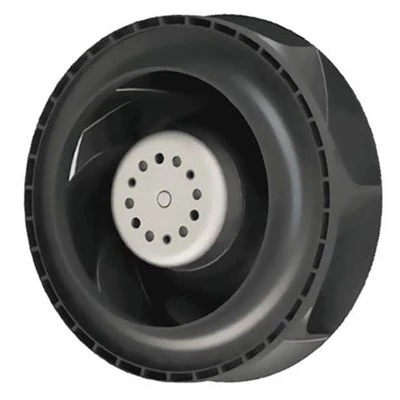
First off, contamination control is non-negotiable here. Cleanrooms exist for industries like pharma, microelectronics, or biotech where even a single dust particle can ruin a batch of meds, a semiconductor wafer, or a lab experiment. So your fan can’t be a source of mess. Let’s be real—standard DC axial fans have all kinds of tiny gaps, rough internal parts, and even grease that can outgas or shed over time. That’s a no-go for cleanrooms. We design our DC axial fans with hermetically sealed motors, no exposed bearings, and we use low-outgassing materials—think FDA-approved plastics and non-staining lubricants that don’t flake off. I’ve had a customer in the semiconductor industry tell us once that their old fans were leaving micro-residue on wafers, and within a month of switching to our sealed DC axial fans, their defect rate dropped 12%. That’s the kind of win that matters in cleanrooms.
Next, airflow consistency. Cleanroom airflow isn’t just “moving air”—it’s calibrated to a precise rate to keep particles from settling in bad spots (like corners or equipment gaps). If your fan cycles on and off weirdly, or its airflow drops over time, that balance goes out the window. DC axial fans are way better than AC ones here because they run on direct current, which means you can dial in exact airflow rates with PWM (pulse-width modulation) controls. Wait, PWM is just a fancy way of saying you can adjust speed smoothly without spikes, right? We program our fans to maintain steady airflow even when the cleanroom’s HVAC system fluctuates a little. For example, a lab customer of ours has a cleanroom that needs 120 CFM (cubic feet per minute) exactly, no plus or minus 5, and our DC axial fans hit that consistently—no AC fan’s speed variation there. Also, vibration is a big one; too much vibration can dislodge particles from surfaces inside the fan, so we balance every fan’s impeller to within 0.5 grams, which is way tighter than standard fans. That’s small, but it adds up to zero extra contamination.
Then there’s thermal performance. Cleanroom equipment (like wafer fabrication machines, incubators, or HPLC systems) runs hot, and you don’t want that heat building up because your fan can’t keep up. DC axial fans are more energy-efficient than AC fans at lower speeds, which is perfect for cleanrooms where you don’t need blast-level cooling 24/7. But here’s the catch: the fan has to work at its best in the cleanroom’s specific temp and humidity. We test all our DC axial fans in 68°F to 95°F temps and 30-70% humidity, which covers most standard cleanroom environments. If a customer has a special high-humidity cleanroom (like a biotech lab with cell cultures), we can adjust the motor seals and materials to handle that without rust or performance loss. I once had a pharma client in a sterile processing cleanroom that had a humidity spike issue—our DC axial fans adjusted their speed automatically via built-in humidity sensors (we add those as an option) and kept the temp steady, no overheating of their sterilizers.
Wait, filtration compatibility—don’t sleep on that. Cleanrooms use HEPA filters, right? The fan has to pull air through those filters without causing damage, and also the fan itself can’t block the air path in a way that makes filters work harder than they should. Our DC axial fans have a streamlined impeller design that minimizes pressure drop across the filter, so you don’t have to replace filters as often. Also, the fan’s housing is smooth on the inside, no sharp edges that can catch and dislodge filter fibers. I’ve heard horror stories from other suppliers where their cheap DC axial fans tore HEPA fibers, leading to particle leaks in the cleanroom. We test every batch of our fans with HEPA filters to make sure that doesn’t happen—no shortcuts here.
Another big one: compliance. Different cleanrooms have different standards—ISO 14644 for air purity, cGMP for pharma, SEMI for semiconductors. Your fan can’t just meet those standards; it has to be documented to do so. That’s not a big deal for us, because we keep detailed test reports for every fan model, including outgassing tests, vibration levels, and airflow performance. A customer in Germany once required ISO 14644 Class 5 certification for all their equipment, and our DC axial fans checked every box—we provided all the test data they needed, no chasing us for paperwork. Standard off-the-shelf fans rarely have that level of documentation, which is a problem when auditors come in.
Now, let’s talk about something that’s easy to overlook: noise. Cleanrooms often have people working in them, or sensitive equipment that can be disrupted by loud noise. DC axial fans are quieter than AC fans at the same airflow, because their motors run more smoothly. We spec our fans to be under 50 dB (A-weighted, which is the standard for noise in workspaces) at full speed—about as loud as a normal conversation. For a cleanroom where researchers are doing delicate tests, that’s a huge plus. I had a microelectronics customer tell us their old AC fans were so loud they had to wear earplugs, but our DC axial fans are quiet enough that they don’t need them anymore, and their test accuracy didn’t suffer from noise interference.
Wait, are there any other requirements? Oh right, ease of maintenance. Cleanroom downtime is expensive—if your fan breaks, you can’t just shut down the whole space for hours. Our DC axial fans are designed to be tool-free to take apart, so you can clean the impeller or replace a seal in 10 minutes, no special tools. Also, we use common parts, so if you need a replacement, you don’t have to wait for a custom part. A hospital’s sterile cleanroom once had a fan fail, and we shipped a replacement part same-day—they were back up in 15 minutes, no disruption to patient care. That’s the kind of reliability that matters for cleanrooms.
I’ve seen a lot of suppliers cut corners on DC axial fans for cleanrooms, trying to use standard models and add a “cleanroom” label to charge extra. But that doesn’t work—every single one of the points I mentioned (contamination control, airflow consistency, thermal performance, filtration compatibility, compliance, noise, maintenance) has to be met. For us, that’s not just a business; we work with cleanrooms every day, so we know what you actually need, not what sounds good in a spec sheet.
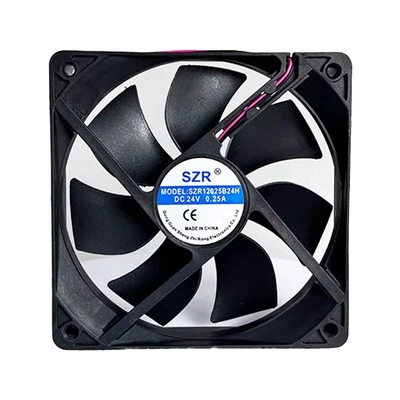
If you’re a cleanroom operator who’s tired of fans that cause contamination, waste energy, or require constant maintenance, let’s chat. We can tailor a DC axial fan solution to your specific cleanroom’s needs, whether that’s a small lab cleanroom or a large pharmaceutical manufacturing space. No generic products, no hidden fees—just fans that are built for your unique environment.
Industrial Cooling Fan References
- ISO 14644-1:2015, Cleanrooms and associated controlled environments — Part 1: Classification of air cleanliness by particle concentration
- IEST-RP-CC005.3, HEPA and ULPA Filters
- FDA 21 CFR Part 210, Current Good Manufacturing Practice in Manufacturing, Processing, Packing, or Holding of Drugs
Dongguan Shengzhirong Electronics Co., Ltd.
As one of the most professional dc axial fan manufacturers and suppliers in China, our products have good reputation in the market. Please rest assured to wholesale high quality dc axial fan made in China here from our factory. Customized orders are welcome.
Address: 6/F, Building 2, No.68, Shunxing 2nd Road, Dajingtou 2nd Industrial Zone, Dalang Town, Dongguan City, Guangdong, China
E-mail: szr_coolingfan@163.com
WebSite: https://www.szrfan.com/
