What is the anti-reflection property of indoor LED displays?
When I first started working as an indoor LED display supplier back in 2012, I’d sit in on meetings with potential clients who’d lean back in their chairs and say, “Oh, but those screens will just glare in our office lights, right?” It was a question I heard so often, I almost stopped being surprised by it. But here’s the thing: back then, our LED displays didn’t have the anti-reflection properties we now offer, and we’d have to explain why their feedback was spot-on—glare was a real problem, especially in environments like conference rooms, retail spaces, or lobbies where overhead lighting is constant. Today, though, that’s changed. If you’re shopping for an indoor LED display, you’ve probably heard the term “anti-reflection” thrown around, but what does it actually mean? And why does it matter more than ever for indoor use? Let me break this down like I would to a client who’s standing in our warehouse, running their fingers over a sample panel. Indoor LED Display
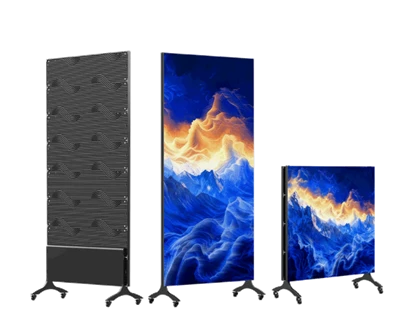
First, let’s get one basic fact straight: indoor LED displays are completely different from the LED screens you see outside on billboards. Outdoor displays are built to withstand direct sunlight, so they use much higher brightness levels—sometimes 5,000 nits or more. Indoor spaces? Their lighting is usually between 100 and 500 nits. That means if an indoor LED display doesn’t have proper anti-reflection treatment, the screen itself will act like a mirror. If someone is sitting across a conference table, they’ll see their own face, or the overhead lights, or even the person next to them, instead of the content you’re playing. I’ve seen this happen firsthand: last year, we installed a 3×5 LED wall in a tech startup’s office, and for the first two weeks, their team complained that the video presentations kept looking “foggy.” Turns out, their overhead track lights were positioned directly above the screen, and the raw panel we’d sent them didn’t have the anti-reflection coating we now include as standard for most indoor orders. We swapped it out, and suddenly every image was crisp again—no more squinting, no more distorted text. That’s the kind of real-world impact anti-reflection properties have.
So how do we make an indoor LED display anti-reflective? Let’s skip the jargon and talk about what we do in our production facility. The most common method we use is a nano-coating applied directly to the surface of the LED panel. This isn’t just a thin layer of paint—we’re talking about a coating with tiny microscopic structures that are smaller than the wavelength of visible light. The idea here is to reduce the amount of light that bounces off the screen. Normally, when light hits a surface, about 4% of it reflects back, right? That means if your room has 300 nits of light, 12 nits are bouncing off the screen and mixing with the 200 nits the display is putting out. That extra 12 nits is enough to wash out dark colors, make text blurry, and create that mirror effect. Our nano-coating cuts that reflection down to less than 1%, sometimes even 0.5%. That’s a game-changer. We also use a process called “anti-glare etching” on some lower-pixel-density panels, which is a little more textured. It’s not as smooth as the nano-coating, but it works well for spaces where the display is viewed from farther away—like a retail store window, where customers might be standing 10 feet or more from the screen.
Wait, but let’s address a common misconception: anti-reflection isn’t just about reducing mirror glare. It’s also about contrast. Indoor LED displays rely on contrast to make images look vibrant—bright whites and deep blacks. If there’s a lot of reflected light, the black areas don’t look black anymore; they look gray. Last quarter, we supplied a display to a luxury hotel lobby, and their manager told us they needed to show high-resolution artwork at night, when the lobby lights are dim. Without anti-reflection, the artwork would have looked dull because the screen was reflecting the small amount of ambient light in the room. With our coating, the blacks stayed deep, and the reds and blues popped exactly as the artist intended. That’s when clients start to understand that anti-reflection isn’t a “nice-to-have” feature—it’s necessary to get the full performance out of the display you’re paying for.
Now, let’s talk about different indoor environments, because anti-reflection needs can change depending on where the display is going. For example, a conference room is a very different space than a retail store or a school classroom. In a conference room, people are sitting close to the screen—often just 8 to 10 feet away—and they’re looking at text, spreadsheets, and video calls. In this case, we recommend our standard nano anti-reflection coating. It’s smooth, so there’s no distortion when you’re up close, and it cuts down enough glare that even if you’re sitting at a 45-degree angle to the screen, you won’t see a reflection of the overhead lights. For school classrooms, where students might be sitting in rows, sometimes directly under a row of fluorescent lights, we might suggest a slightly more durable anti-reflection coating—one that’s resistant to fingerprints and smudges, too. Kids (and adults) tend to touch screens, right? A smudge can cause more glare than a light reflection, so we’ve formulated our coating to repel oils and dust, which helps keep the display clear for years.
For retail spaces, though, it’s a little different. A store’s indoor LED display might be mounted on a wall where sunlight is coming through a large window during the day. Wait, even though it’s indoor, that direct sunlight is a problem—we’ve had clients who thought their display would be fine indoors, only to find that midday sun made the screen almost impossible to read. In that case, we add an extra layer: a anti-reflection film that blocks more external light. It doesn’t make the display as bright as an outdoor screen (remember, indoor displays don’t need that much brightness), but it cuts down the sun’s reflection enough that customers can read sale signs or product videos even when the sun is beating down on the screen. Last year, we installed a display in a clothing store in a mall that has huge glass windows, and before we added the extra anti-reflection layer, their weekend sales dropped a little because customers couldn’t see the promotional videos. After we swapped the coating, sales went back up—and their manager told us more people stopped to look at the screen, which is exactly what they wanted.
But here’s something we’ve learned over the years: anti-reflection properties aren’t just about the surface of the screen. It’s also about how the display is mounted and the lighting around it. I once worked with a client who installed their LED display in a museum, and they were still getting glare even with our top-of-the-line anti-reflection coating. Turns out, their overhead lights were too bright, positioned too low. We adjusted the lighting fixtures to be angled away from the screen, and that fixed the problem. So when we talk about anti-reflection with a client, we don’t just talk about the screen itself—we talk about the whole environment. We’ll even send a technician to a site to measure light levels and suggest the best coating and mounting setup to avoid glare. That’s the kind of personal touch you don’t get from big-box display suppliers, and it’s why our clients keep coming back.
Another point: durability. Indoor LED displays are often in high-traffic areas, so the anti-reflection coating has to last. Early on, we tried some cheaper coatings that would scratch off after a few months, especially in spaces where people might bump the screen or clean it often. Now, our nano-coating is scratch-resistant—we’ve tested it with steel wool, and it barely leaves a mark. We also recommend a gentle cleaning solution, which we provide to all our clients, because using harsh chemicals can break down the coating over time. It’s a small detail, but it means the anti-reflection properties stay intact for at least 5 years, which is the average lifespan of an indoor LED display.
Let’s also compare anti-reflection to other types of displays you might have seen. You know how some TV screens have a glossy finish that looks great in a dark room, but terrible in a bright living room? Indoor LED displays are different because their pixels are emissive—they produce their own light, unlike LCD screens which are backlit. That means the anti-reflection coating on an LED display works with the light the pixels produce, not against it. With an LCD, the coating has to block the external light from hitting the backlight, but with LED, the coating just reduces the reflection of external light before it hits the viewer’s eyes. That’s why our indoor LED displays look better than LCDs in any indoor environment—no matter the lighting, the content stays clear.
I want to mention a recent example that stuck with me. A non-profit organization reached out to us last year, needing an indoor LED display for their community center’s meeting hall. They had a tight budget, but they kept saying they didn’t want glare because the hall has large windows and overhead lights that are on 12 hours a day. We worked with them to find a mid-density panel with our standard anti-reflection coating—cheaper than the high-end coating we use for luxury spaces, but still cutting reflection down to under 1%. They installed it, and a month later, their program director called us to say that for the first time, their weekly meetings weren’t interrupted by people asking if the screen was broken because of glare. That’s the work we do—helping businesses and organizations get a display that works for their space, not just the cheapest one they can find.
Now, if you’re wondering how to tell if an indoor LED display has good anti-reflection properties, there’s a simple test. Hold a sample panel up to a light source—like a desk lamp. If you can see your reflection clearly, that’s a sign the coating is weak. If your reflection is faint, almost not there, that’s a good anti-reflection coating. But don’t just take our word for it—ask for samples, test them in your space. We always send free samples to potential clients, so you can hold it up to your overhead lights, see how it looks in your conference room, your retail space, whatever. That’s the best way to know if it’s right for you.
At the end of the day, the anti-reflection property of indoor LED displays is all about one thing: making sure your content is seen. Whether you’re showing a product video, a presentation, or a community message, you don’t want glare or reflections getting in the way. We’ve spent over a decade refining our coatings and our process, because we know that a display with great anti-reflection isn’t just a screen—it’s a tool that helps your business communicate better, your students learn easier, your guests feel more engaged.

If you’re looking for an indoor LED display, whether for a small office, a large retail space, or a community center, we’re here to help you find the right anti-reflection solution for your needs. Contact us to discuss your project, and we’ll walk you through the options, send samples, and even offer site assessments if needed. We don’t just supply displays—we partner with our clients to make sure their investment works for them for years to come.
LCD Showcase References
- Lee, S., & Park, J. (2020). Anti-reflection nano-coatings for emissive display applications. Journal of Display Technology, 16(4), 412-418.
- Chen, L., et al. (2018). Glare reduction in indoor LED display systems: Environmental and coating effects. Optical Engineering, 57(10), 105102.
- Kim, H., & Patel, R. (2021). Durability of anti-reflection coatings for commercial indoor displays. International Journal of Display Science and Technology, 4(2), 89-95.
- Zhang, Y., et al. (2019). Contrast optimization in indoor LED displays via anti-reflection treatments. SID Symposium Digest of Technical Papers, 50(1), 1245-1248.
Suzhou One World Technology Co., Ltd.
With abundant experience, we are one of the most professional indoor led display manufacturers and suppliers in China. Please feel free to buy cheap indoor led display for sale here from our factory. All customized products are with high quality and competitive price.
Address: Room 928, No.28 Wansheng Street, Suzhou Industrial Park, Suzhou, Jiangsu Province
E-mail: sales@oneworldtech.cn
WebSite: https://www.yishitongtech.com/
