Hey guys, let’s talk about something that’s bugged every process engineer, maintenance tech, and even the small shop owner who’s just trying to keep their water system running smooth: pressure drop in high flow water filter cartridges. I’m gonna keep this real, not like some stuffy white paper that makes your eyes glaze over—since I’ve been supplying high flow filter cartridges for over a decade, I’ve seen this play out in everything from food processing plants to car wash bays, and pressure drop is the quietest (and most damaging) performance killer there is. Let’s break it down like we’re geeking out over our own water systems, not writing a thesis. High Flow Water Filter Cartridge

First off, what even is pressure drop, exactly? If you’ve ever pinched a garden hose halfway and felt the water spray harder out the pinched part but slower at the end, that’s pressure drop in a nutshell. But for filter cartridges, it’s the difference in water pressure between the inlet (where the dirty water comes in) and the outlet (where the clean water comes out) of the cartridge. All filters work by forcing water through a dense medium—usually polypropylene, cellulose, or something micro-porous that catches gunk, sediment, biofilm, whatever’s floating in there. Every tiny particle that gets stuck in those pores clogs things up, and that clog is what makes pressure go down on the clean side over time.
Now, why does this matter for high flow cartridges specifically? Let’s be clear: high flow isn’t just a marketing buzzword. These cartridges are built for when you need to move a lot of water fast—think 50 gallons per minute (GPM) or more, way higher than the 10 GPM standard filters are made for. They’re used in places where downtime costs big money: a beverage plant can’t stop making soda for a filter change, a mining operation can’t shut down its process water line, a laundry mat can’t afford to have half its machines out of service. So when pressure drop hits, it’s not just a minor inconvenience—it’s a direct hit to your bottom line.
Let’s start with the obvious performance hit: flow rate itself. If your pressure drop gets too high, that differential between inlet and outlet pressure gets out of whack, and your system can’t push water through the cartridge as fast as it’s supposed to. I’ve had a customer who ran a small commercial car wash call me in a panic one time—they went from 20 GPM per filter cartridge to 12 GPM in less than a week, and their cars were coming out with streaks because the rinse water wasn’t reaching the whole vehicle. Turns out their inlet pressure stayed the same, but the filter had built up so much crud that the pressure drop hit 15 psi, which is their operational limit. They had to shut down two bays for 8 hours to change filters, costing them thousands in lost revenue. That’s the kind of thing that keeps maintenance managers up at night.
Wait, but hold on—isn’t high flow supposed to handle more flow without high pressure drop? Yeah, that’s the whole point of our cartridges, by the way. We design ours with a large filtration area—sometimes twice the surface area of standard cartridges—so there’s more room for particles to get stuck before they clog the whole thing. But even the best design has a limit. Let’s get into the actual mechanics here, no jargon I promise: when water is moving fast through a filter, it exerts more force on those trapped particles. If the pressure drop gets too high, that force can actually push some of the already-captured particles right back through the filter medium. That’s called “blow-through,” and it’s the worst-case scenario because you paid to filter out that sediment only to have it go straight back into your clean water line. I’ve seen this happen in a municipal water treatment plant once—their pressure drop hit 20 psi, and they had a spike in turbidity that set back their compliance test for a month. They had to replace not just the filters, but some downstream equipment too, which added tens of thousands to their bill.
Another big one: energy consumption. If your system’s pump has to work harder to push water through a filter that’s got high pressure drop, that means higher electricity bills. Let’s do a quick real-world math example: a process pump that runs 24/7 uses about $500 a month in electricity. If a clogged filter adds 5 psi to the system, that can boost energy use by 10-15%—so add $50 to $75 a month for one filter. Multiply that by 10 filters in a large system, and that’s $500-$750 a month just because you didn’t monitor pressure drop. It adds up fast, and it’s totally avoidable if you track that metric like you would pressure or temperature.
Wait, but what about the other end? Is low pressure drop always a good thing? Wait, no—hear me out. If your pressure drop is way lower than it’s supposed to be, that could mean your filter isn’t working at all. Like, if you installed a new filter and the inlet and outlet pressure are almost the same, that means water is just bypassing the filter medium, or the pores are too big, or you didn’t seat the cartridge right. I’ve had a customer who thought he was saving money by buying cheap filters that had 2 psi pressure drop when new, but turns out the pores were so big they weren’t catching fine sediment, so his machining parts were getting scratched. He ended up having to replace twice as many parts a month, which cost way more than he saved on cheap filters. So pressure drop is a balance, not a number that’s either good or bad on its own.
Now, how do we as suppliers help our customers manage this? Because we’re not just selling cartridges—we’re solving problems. First, we test every high flow cartridge in our lab to give customers a clear pressure drop curve, so they know exactly when the filter is approaching its limit. For example, our PP high flow cartridges have a rated pressure drop of 10 psi at full flow, and we tell customers that when it hits 12 psi, it’s time to change the filter. That’s not a random number—it’s based on thousands of tests where we saw blow-through start at 13 psi, so we leave a safety buffer.
We also make cartridges that are tailored to different applications. Like, for water with a lot of heavy sediment (like from well water or mining runoff), we make cartridges with a depth filtration design—meaning the particles get trapped deep in the medium, not just on the surface, so they don’t clog the pores as fast and pressure drop rises slower. For applications where you need to catch fine particles (like beverage processing or pharmaceutical water), we make a pleated membrane design that has a tight, uniform pore structure, so pressure drop is consistent and blow-through is rare when operated at the right differential.
But here’s the thing I always tell customers: you can’t just install a filter and forget about pressure drop. You have to monitor it regularly. We give all our customers free quick-reference charts that tell them how often to check pressure drop based on their water quality—if their water is super dirty, check it every 24 hours; if it’s relatively clean, every 7 days. We also have a great app (shoutout to the small tech team I work with) that sends alerts when pressure drop hits your custom threshold, so you don’t have to be there staring at a gauge to know when to change filters. That’s the kind of support that makes our customers come back, not just the cartridge itself.
Wait, let’s circle back to that car wash customer I mentioned earlier, because that’s a perfect example of what happens when you ignore pressure drop. They didn’t have a way to track it, so they changed filters on a fixed schedule, like every 2 weeks no matter what. But during a rainy week, their well water had more mud than usual, so the filter clogged in 5 days, leading to high pressure drop, low flow, and lost revenue. Now they use our monitoring system, and their filter change frequency is every 7-10 days depending on water conditions, so they don’t have unplanned downtime. Their energy bills went down 12% too, because their pumps aren’t working as hard. That’s the real win here—it’s not just about selling a cartridge, it’s about helping someone avoid the kind of headache that comes from not understanding pressure drop.
Another common myth I hear all the time: “higher flow means higher pressure drop, so I should just go with a lower flow filter to keep pressure drop low.” No, that’s backwards. If you try to push high flow through a filter that’s rated for low flow, you’re going to get way higher pressure drop way faster, plus blow-through, like that machining customer I had. The key is matching the cartridge’s flow rating to your system, and letting the pressure drop be your guide for when to change it, not a fixed schedule. Our high flow cartridges are designed to handle that higher flow without spiking pressure drop, so you get the speed you need without the performance hit.
What about long-term performance? Let’s say you have a system that runs for years. If you don’t manage pressure drop, what happens? You’re going to have more frequent filter changes, which means more labor costs, more waste, and more risk of human error (like installing a filter wrong, leading to contamination). Plus, as pressure drop fluctuates, it can stress the pump and other system components—pumps running at higher pressure have shorter lifespans, so you’re looking at even more downtime and repair costs. I’ve seen a pump last 5 years instead of 10 just because the system was running with clogged filters and high pressure drop. That’s a huge hidden cost that no one thinks about until the pump breaks.
So putting this all together: pressure drop isn’t just a metric on a gauge—it’s a window into how your filter is performing, and if you’re getting the most out of your system. For high flow filters, this is even more critical because the stakes are higher—more flow means more money on the line if something goes wrong. The good news is that it’s manageable. You just need to pick the right filter cartridge for your application, track pressure drop regularly, and work with a supplier who gives you the support to do that.
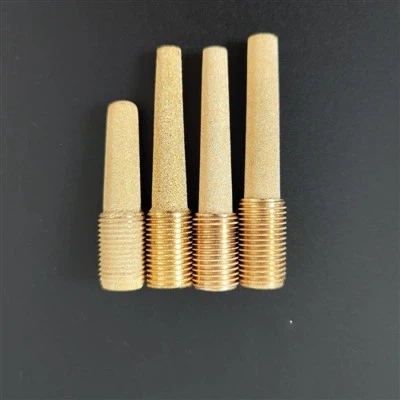
If you’re dealing with high flow water systems, whether it’s industrial, commercial, municipal, or anything in between, and you’re tired of unplanned downtime, high energy bills, or filter performance that’s all over the place, reach out to us to chat through your needs. We don’t do one-size-fits-all solutions—we’ll help you figure out exactly what filter cartridge works for your pressure parameters, flow rate, and water quality, so you can keep your system running smooth without the stress. Don’t let pressure drop be the hidden problem killing your performance—let’s tackle it together.
Sintered Wire Mesh Material and Filter References:
- ASTM International. (2018). Standard Test Method for Rate of Flow of Liquids Through Porous Media. ASTM D2458-18.
- Water Quality Association. (2020). High Flow Filter Performance and Pressure Drop Guidelines. WQA Publication 12-05.
- Hydraulic Institute. (2019). Pump System Energy Efficiency: Reducing Energy Losses Through Proper Filter Selection. HI White Paper WP-07-19.
- Filter Media & Separation Association. (2021). Depth vs Surface Filtration: Pressure Drop and Particle Capture Tradeoffs. FMSA Technical Report TR-09.
Henan Easy Filter Equipment Co., Ltd.
As one of the leading high flow water filter cartridge manufacturers and suppliers in China, we offer a wide range of products with superior quality. Please rest assured to buy advanced high flow water filter cartridge from our factory. We also accept customized orders.
Address: Apartment No.1, Building No.2, Zhengshang Jinyushijia, Xinzhong Street, Xinxiang, Henan, China.
E-mail: vivian@easyfiltertech.com
WebSite: https://www.easyfilter-china.com/
