Can All-LED Curing be used for curing sealants?
As a proud provider of All-LED Curing solutions, I am often posed with a crucial question from industry professionals and potential clients alike: Can All-LED Curing be used for curing sealants? This in-depth exploration aims to shed light on this topic, drawing upon scientific understanding and real-world applications. All-LED Curing

Understanding All-LED Curing
Before delving into its application for sealants, it’s essential to understand what All-LED Curing entails. LED – light emitting diode – technology has revolutionized the curing process across multiple industries. Unlike traditional curing methods, such as mercury lamps, All-LED Curing offers a narrow – band light output that can be precisely tuned to match the photo – initiators in the materials being cured.
LEDs emit light in a specific wavelength range, typically in the ultraviolet (UV) or visible light spectrum. This targeted light emission allows for efficient energy transfer to the sealant, activating the photo – initiators. These initiators then trigger a chemical reaction that causes the sealant to cross – link and harden, transforming it from a liquid or semi – liquid state to a solid, durable form.
Advantages of All-LED Curing for Sealants
One of the most significant advantages of using All-LED Curing for sealants is its energy efficiency. Traditional curing lamps, such as mercury vapor lamps, consume a large amount of electricity and produce a significant amount of heat. In contrast, LEDs convert a higher percentage of electrical energy into light, resulting in lower power consumption and reduced heat generation. This not only saves on energy costs but also minimizes the risk of heat damage to the sealant or the substrate it is applied to.
The precision of All-LED Curing is another key benefit. The ability to select a specific wavelength of light enables a more customized curing process. Sealants often contain different photo – initiators, each with an optimal activation wavelength. By using an All-LED Curing system, the light output can be tailored to match these initiators precisely, ensuring a more complete and efficient cure. This leads to improved adhesion, better mechanical properties, and enhanced chemical resistance of the sealant.
Furthermore, All-LED Curing systems have a longer lifespan compared to traditional curing lamps. LEDs can last tens of thousands of hours without significant degradation in light output, reducing the frequency of lamp replacements. This results in less downtime for maintenance and lower overall operating costs in the long term.
Compatibility with Different Sealant Types
A wide variety of sealants are available in the market, including silicone, polyurethane, and epoxy – based sealants. Each type of sealant has distinct properties and requirements for curing. All-LED Curing has shown great promise in being compatible with many of these sealant types.
Silicone sealants are widely used due to their excellent flexibility, weather resistance, and temperature stability. For silicone sealants with appropriate photo – initiators, All-LED Curing can provide a fast and efficient cure. The narrow – band light of LEDs can penetrate the sealant evenly, ensuring consistent cross – linking throughout the material. This results in a cured silicone sealant that maintains its flexibility while achieving a high level of adhesion.
Polyurethane sealants are known for their toughness and chemical resistance. All-LED Curing can be effectively applied to polyurethane sealants, especially those formulated with UV – responsive photo – initiators. The precision of LED light allows for a well – controlled cure, resulting in a sealant with excellent mechanical properties and long – term durability.
Epoxy – based sealants often require a precise curing process to achieve their maximum strength and chemical resistance. All-LED Curing offers the ability to adjust the light intensity and wavelength, which is crucial for epoxy sealants. By providing the right amount of energy at the appropriate wavelength, the curing reaction can be optimized, leading to a fully cured and high – performance epoxy sealant.
Scientific Principles Behind the Curing Process
The curing of sealants using All-LED Curing is based on the principles of photopolymerization. Photopolymerization is a chemical reaction in which monomers (small molecules) are linked together to form polymers (large molecules) when exposed to light.
In a sealant, photo – initiators play a central role in this process. These are molecules that absorb light energy and undergo a chemical transformation to produce reactive species, such as free radicals or cations. These reactive species then initiate the polymerization reaction of the monomers in the sealant.
The efficiency of the photopolymerization process depends on several factors, including the intensity and wavelength of the light, the concentration and type of photo – initiators, and the properties of the monomers. All-LED Curing systems allow for precise control of these factors. For example, by adjusting the power output of the LEDs, the intensity of the light can be regulated. Additionally, different LEDs can be selected to emit light at specific wavelengths that are most effective for the photo – initiators in the sealant.
Real – World Applications and Case Studies
In the automotive industry, All-LED Curing has been increasingly adopted for curing sealants used in vehicle assembly. For example, in the bonding of windshields, a silicone – based sealant is often used. All-LED Curing systems can quickly and efficiently cure the sealant, ensuring a strong and reliable bond between the windshield and the vehicle frame. This not only improves the safety of the vehicle but also reduces the production time, as the curing process is much faster compared to traditional methods.
In the electronics industry, sealants are used to protect sensitive components from moisture, dust, and other environmental factors. Epoxy – based sealants are commonly employed, and All-LED Curing provides a clean and efficient curing solution. The low heat output of LEDs is particularly beneficial in this application, as it prevents damage to the delicate electronic components during the curing process.
Challenges and Considerations
While All-LED Curing offers numerous benefits for curing sealants, there are also some challenges and considerations. One challenge is the limited penetration depth of LED light. In some cases, particularly with thick sealants, the light may not be able to reach all parts of the material, resulting in an incomplete cure. This can be mitigated by using sealants with better light – transmitting properties or by adjusting the light intensity and exposure time.
Another consideration is the cost of All-LED Curing systems. Although the long – term operating costs are lower, the initial investment in an All-LED Curing system can be higher compared to traditional curing methods. However, as the technology continues to develop and economies of scale are realized, the cost is expected to become more competitive.
Conclusion
In conclusion, All-LED Curing can indeed be used for curing sealants, offering a range of advantages including energy efficiency, precision, long lifespan, and compatibility with various sealant types. The scientific principles behind photopolymerization support the effective use of All-LED Curing in this application, and real – world case studies demonstrate its viability in industries such as automotive and electronics.
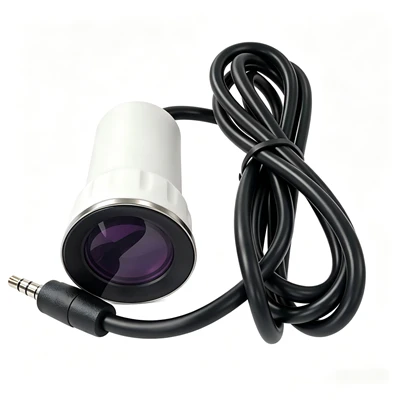
While there are challenges to overcome, the potential benefits far outweigh the drawbacks. As a leading supplier of All-LED Curing solutions, we are committed to providing high – quality products and technical support to our clients. Whether you are a small – scale manufacturer or a large industrial enterprise, our All-LED Curing systems can help you improve the quality of your products, increase production efficiency, and reduce costs.
LED Module If you are interested in exploring how All-LED Curing can be applied to your sealant curing process, we invite you to contact us for a detailed consultation. Our team of experts will be happy to discuss your specific requirements and provide you with customized solutions.
References
- Decker, C. (1996). Photopolymerization of multifunctional monomers. Advances in Polymer Science, 127, 55 – 108.
- Guenther, R., & Koehler, B. (2004). UV/visible radiation curing – a historical overview. Radiation Curing in Polymer Science and Technology, 4, 1 – 18.
- Webster, D. C. (Ed.). (2007). Radiation Curing Science and Technology. CRC Press.
UVLEDTEK Group
As one of the most professional all-led curing manufacturers and suppliers in China, our products have good reputation in the market. Please rest assured to buy high quality all-led curing at competitive price from our factory. For more information, contact us now.
Address: Huangshi Industrial Zone, Putian City, Fujian Province, China
E-mail: info@uvledtek.com
WebSite: https://www.uvledtek.com/
