Hey folks, let’s cut to the chase—if you’re a building manager, HVAC tech, or someone overseeing a commercial construction project, you’ve probably Googled “fire rated duct wrap installation time” at 2 a.m. when your general contractor’s blowing up your phone for a timeline, and half the results online feel like they were written by someone who’s never held a roll of duct wrap. As a fire rated duct wrap supplier who’s worked with contractors across the U.S. for 12 years, I’ve seen this question cause way more headaches than it should. Let’s break it down straight, no industry jargon that makes your eyes glaze over. Fire Rated Duct Wrap
First off, let’s get one thing clear: there’s no one-size-fits-all answer. I wish there was, but duct wrap installation isn’t like slapping a sticker on a laptop. It depends on three big things: what kind of wrap you’re using, the size of the duct system, and how prepared your team is. Let’s start with the wrap itself because that’s where most people mess up their timeline.
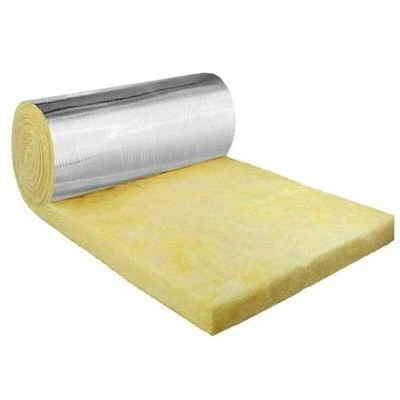
There are two main types of fire rated duct wraps out there right now—one’s the lightweight, flexible fiberglass type (super common for mid-rise offices and retail spaces) and the other is the thicker, rigid mineral wool stuff, usually required for high-rise buildings or areas with stricter fire codes. The fiberglass wrap is way faster to install. For a standard 10-foot section of 12-inch round duct, a two-person crew can knock that out in 15 to 20 minutes. That’s not a typo. I’ve had a crew bang out 50 linear feet of that stuff in a 4-hour shift on a small café project. The mineral wool? That’s a different story. It’s denser, has to be cut more precisely to avoid gaps (gaps are a fire code no-no, by the way), and it’s heavier, so lifting it into place takes extra time. For that same 10-foot 12-inch round duct, you’re looking at 30 to 40 minutes per section, maybe more if your techs are new to it.
Then there’s the duct size. Let’s be real—installing wrap on a tiny 6-inch round duct is way different from wrapping a 4-foot rectangular duct that runs through a basement. Smaller ducts are straightforward, take less material, and don’t require ladders or scaffolding. Large rectangular ducts, especially those that are high up in a building’s mechanical room, add time because you might need extra hands to hold the wrap while you staple or seal it. We had a job last year where a school’s HVAC team had to wrap 1,200 linear feet of 3-foot by 2-foot rectangular duct. They brought three people, and they averaged 25 minutes per linear foot. That might sound slow, but when you’re dealing with a duct that big, you can’t just yank the wrap on—you have to make sure it’s taut, no wrinkles, and sealed at every seam to meet fire ratings. If you cut corners there, the local fire marshal could shut down the job, so it’s not worth rushing.
Now, the biggest variable: prep time and crew experience. I can’t tell you how many times we’ve had contractors call us panicking because they ordered wrap last minute, and their crew has never installed it before. If your techs are used to regular duct insulation (the stuff that’s not fire rated), it’ll take them twice as long to get up to speed. Fire rated wrap has specific sealing requirements—most codes demand you use a fire-resistant mastic at every seam, not regular silicone. Skipping that means your wrap won’t meet the UL (Underwriters Laboratories) rating it’s supposed to. A seasoned crew that’s done 10+ fire wrap jobs can crank through 80 to 120 linear feet per day on standard fiberglass wrap. A brand-new crew? Maybe 30 to 50 linear feet, tops.
Also, don’t forget extra parts. Ducts don’t run in straight lines—you have elbows, joints, dampers, and access panels. Each of those adds time, especially the elbows. Elbows have curved edges that need extra cuts and sealing to prevent gaps. A single 90-degree elbow might add 10 to 15 minutes of work. If your duct system has a bunch of elbows or cross-ducts, that’ll eat into your timeline way more than just the straight runs. We once had a job for a hospital where the duct system had 27 elbows and 12 dampers. The initial timeline the contractor gave us was 5 days; it ended up taking 7 because of all those tricky fittings.
Wait, let’s talk about common mistakes that add unnecessary time too. Some contractors try to use less wrap than needed to save money, which means they have to go back and add extra pieces. Others don’t measure the duct properly before cutting the wrap, leading to wrong sizes that require re-cutting. Both of those things double the installation time. My advice? Measure every single duct section and fitting twice before you unroll the wrap. It takes 5 extra minutes now, but saves you hours later.
Now, let’s get to the numbers you’re actually here for. For a small, simple project—like a 1,000-square-foot retail space with 500 linear feet of 8-inch round duct, all straight runs, and a two-person crew that’s done this before? You’re looking at 1 to 2 full work days. For a mid-size project, say a 10,000-square-foot office with 2,000 linear feet of mixed round and rectangular duct, some elbows, and a two-person seasoned crew? That’s 4 to 6 days. For a large high-rise building with 100,000+ linear feet of duct, multiple floors, and a 5-person crew? We usually quote 2 to 3 weeks, but that can shift if there are delays in material delivery or unexpected duct modifications on-site.
Wait, one more thing: code requirements can affect time too. Some cities have stricter rules about fire rated materials than others. For example, California’s Title 24 or New York City’s Local Law 126 have specific standards that demand thicker wrap or more extensive sealing, which adds time to installation. It’s not that the work is harder, it’s that you have to be more thorough. We had a client in LA last year who had to add an extra layer of fire-resistant tape to every seam, which added 20% more time to their job compared to a similar project in Texas where the rules were less strict.
Now, as your fire rated duct wrap supplier, let me give you a pro tip that’ll cut your installation time by 30% right off the bat: order the right wrap for your project and make sure your crew is trained. We offer free on-site training for any contractor who buys our wrap—no hidden fees, no fine print. Last quarter, a contractor in Chicago took us up on that, and they finished their job 2 days ahead of schedule because their crew knew exactly how to cut, seal, and install the wrap without wasting time. We also keep all our wrap in stock, so you don’t have to wait 2 weeks for delivery, which is a huge delay for timeline.
I’ve seen so many projects go over budget or miss deadlines because someone guessed the installation time wrong. I can’t tell you how many times a contractor has called us after their first day on the job, saying “we thought this would take 2 days, but we only did 100 linear feet, not 500.” Most of the time, it’s because they didn’t account for the size of the duct or their crew’s experience level. That’s why we always ask for project details when a contractor reaches out to us—we give a realistic timeline, not a vague estimate, so they can plan their crew and schedule without stress.
At the end of the day, fire rated duct wrap installation time isn’t just a number—it’s about getting the job done right, on code, and on time. Rushing it to save a day can lead to gaps that compromise fire safety, which will cost you way more in fines or rework. If you’re planning a project and want a no-BS timeline, or you need a supplier who can hook you up with quality wrap and even training, don’t hesitate to reach out. We’re here to make this part of your project as easy as possible, so you can focus on the rest of the build.
Fire Rated Duct Wrap References
- Underwriters Laboratories (UL). "Standard for Safety for Air Duct and Plenum Insulation Materials." UL 181, 2021.
- National Fire Protection Association (NFPA). "Standard for Installation of Air-Conditioning and Ventilating Systems." NFPA 90A, 2022.
- International Code Council (ICC). "International Mechanical Code (IMC) Section 507: Fire-Rated Duct Systems." 2021 Edition.
- U.S. Department of Energy. "Commercial HVAC Insulation Installation Guidelines for Fire Resistance." 2020.
Langfang Yafeng Energy-Saving Technology Co., Ltd.
As one of the most professional fire rated duct wrap manufacturers and suppliers in China, we’re featured by quality products and good price. Please rest assured to buy bulk premium fire rated duct wrap for sale here from our factory. Welcome to view our website for more information.
Address: Langfang Xinyafeng, Liugezhuang Town, Dacheng County, Langfang City, Hebei Province
E-mail: yafengbaowen@gmail.com
WebSite: https://www.xyfinsulation.com/
