Hey there, it’s Jake here, and if you’ve ever spent any time hunting for materials for a DIY project, small batch production run, or even a custom promotional giveaway, I’d bet you’ve stumbled across rubber magnet sheets. They’re those flexible, lightweight, easy-to-cut magnetic strips or sheets that stick to fridges, car doors, toolboxes, and just about any ferrous metal surface—super versatile, low-cost, and way less fragile than hard ferrite magnets. But over the 7 years I’ve been working as a rubber magnet sheet supplier, the number one question I get from new customers, and even some repeat folks who test limits of their products, is this: “Are rubber magnet sheets waterproof?” Rubber Magnet Sheet
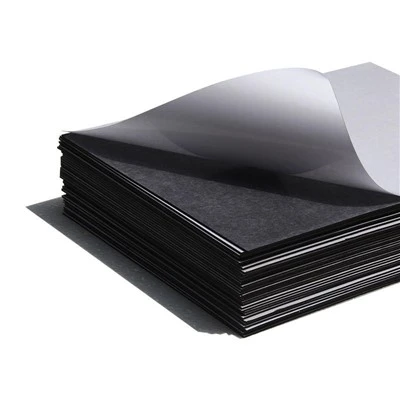
It’s such a loaded question, right? Because “waterproof” means different things to different people. A hobbyist making custom bumper stickers for a local farmers’ market might care if a little rain will ruin their design. A manufacturer making vehicle inspection tags needs to know if their magnetic sign will hold up through car washes and a whole summer of commuting in damp, foggy weather. A company making fridge magnets for beach resorts wants to make sure their souvenirs won’t fall apart or stop sticking if someone leaves one on a wet patio table. I can’t tell you how many times a customer will say, “I need a waterproof rubber magnet” and leave out the details of what kind of water exposure they’re dealing with—does it get submerged in a pool? Is it just occasional splashes from a sink? Will it sit outside in rain for months? That changes everything.
First, let’s get one thing straight from our manufacturing floor: standard commercial rubber magnet sheets, the ones we stock here at our facility, aren’t 100% waterproof. That’s not a gotcha or a way to steer customers toward a more expensive option—it’s the truth based on material composition, and it’s something we spell out clearly in every product spec sheet, because nothing frustrates a customer more than a material that doesn’t perform as advertised. To understand why, let’s break down what rubber magnet sheets are made of. The core is a mix of fine ferrite magnetic powder (that’s the stuff that gives them their pull) and a binder, most commonly PVC (polyvinyl chloride) or a type of rubber called nitrile, depending on the grade. That binder is what gives the sheets their flexibility, but it’s also where the water interaction happens.
Standard PVC-bonded rubber magnets have tiny micro-pores—you can’t see them with the naked eye, but they exist. Those pores are designed to be small enough to hold the ferrite powder in place, but large enough that water vapor can seep in over time, especially if the sheet is exposed to prolonged moisture. If water gets into those pores, two things can happen: first, the moisture can cause the ferrite powder to slowly degrade, though that’s a very slow process—think years, not months—unless the sheet is fully submerged. Second, if you have a printed layer (most rubber magnets are custom printed, right? Whether it’s a logo, design, or text), standard ink used on these sheets isn’t always water-resistant. If water soaks through the micro-pores, it can smudge or fade the print, which is a big problem for promotional magnets where design quality matters.
But here’s the good news: we don’t just sell standard grade rubber magnets. We also make custom formulations, and over the years we’ve developed and tested several waterproof options that solve these exact problems. Let’s talk about what makes a rubber magnet waterproof, and how it performs in different real-world scenarios, because that’s the part most blogs or generic answers skip. When a customer needs a rubber magnet that can handle water, we look at their use case first, because “waterproof for a boat name” is different from “waterproof for a fridge magnet that spills soda on it.”
Let’s start with the different levels of water exposure, because that’s how we categorize our products. The first is “splash-resistant” or “water-resistant,” which is perfect for indoor use: kitchen magnets that get splashed with dish water, office magnets near a window that gets condensation, or temporary outdoor signs that only get exposed to rain a few times. Our standard PVC rubber magnet sheets are actually pretty good here—they can handle occasional splashes, light condensation, even being left out in a light drizzle for a few hours without any issues. We’ve tested this: last year, a local café ordered 500 custom fridge magnets with their menu printed on them, and they kept one on a windowsill by the sink for 30 days, wiping it down weekly. No smudging, no rust, no loss of magnetic pull. The only caveat here is that you shouldn’t leave these out in heavy, prolonged rain—like a sign mounted on a fence that sits outside all winter in constant rain and snow. That’s where we step up to the next grade.
The second level is “waterproof for intermittent outdoor use.” For this, we use a nitrile rubber binder instead of PVC, and we add a proprietary sealant coating that blocks those micro-pores entirely. What that means is water can’t get into the core of the magnet. We tested these sheets by submerging them in a bucket of tap water for 72 hours straight, weighing them before and after to check for water absorption—we found less than 0.1% weight gain, which is negligible. We also tested their magnetic pull before and after submersion: it dropped by less than 2%, which is totally unnoticeable for most applications. These are the magnets we recommend for vehicle signs that go through car washes, boat name plates, temporary outdoor parking signs that sit through a full season of rain, or beach souvenir magnets that might get dropped in the sand and then rinsed off in a shower. Last spring, a small boat repair company ordered 20 of these custom rubber magnet signs with their logo and contact info on them, and they told us six months later, they leave them attached to their work trucks year-round, go through touchless car washes every week, and none of the prints have smudged, and the pull is still as strong as the day they got them.
Now, the third level is “fully waterproof for continuous submersion.” This is the one we get less requests for, but it’s still important for niche applications: things like magnetic fish tags, signs for marine buoys that sit in saltwater year-round, or underwater sensor mounts. For these, we don’t just use a nitrile binder and sealant—we add an extra layer of UV-stabilized, food-grade (or saltwater-grade) polyurethane laminated on top of the printed surface. This layer is completely impermeable to water, no micro-pores, nothing can seep through. We’ve tested these sheets by submerging them in saltwater for 180 days straight (six months) and checking them monthly. The printed layer didn’t fade, the core magnet didn’t degrade, and the magnetic pull is still over 90% of its original strength. We did have one customer a couple years back who used these for magnetic mounts on his underwater fishing camera, and he told us after a year of use, the magnet still sticks perfectly to his metal boat frame, no issues at all.
But wait—even with these waterproof grades, there are limitations, and I think it’s our responsibility as suppliers to be transparent about them, not just sell you a product that might fail. The biggest limitation with all rubber magnet sheets, waterproof or not, is their adhesive layer, if you’re using one. A lot of customers use these magnets with adhesive backing to stick them to things like metal tools, or to stick custom prints to them. If you’re adding adhesive, especially a pressure-sensitive acrylic adhesive that’s not water-resistant, that’s the part that will fail before the magnet itself. We always recommend using a water-resistant adhesive for any outdoor or water-related application, or if you’re sticking the magnet to a surface that might get damp. Also, while rubber magnets are flexible, they’re not indestructible. If you fold them too sharply, especially when they’re wet, they can crack, just like any other rubber product. That’s a user error, not a material defect, and it’s something we always mention when we send out sample sheets.
Another common question I get: do rubber magnets rust? That’s tied into the waterproof question too. The ferrite powder in rubber magnets is iron-oxide based, right? So technically, if water gets into the core and sits there for decades, it could cause a little surface rust, but that’s not a common issue with our products. Because ferrite is non-corrosive compared to regular iron magnets, and with our waterproof sealants, water never gets to the core. We’ve had rubber magnet samples that are 10 years old, exposed to occasional rain and sink splashes, and there’s no rust at all. The only time I’ve seen rust on a rubber magnet is when a customer used a cheap, uncoated magnet, left it submerged in saltwater for years, and never sealed the edges. Oh, right—edge sealing! That’s another big one most people forget. When you cut a rubber magnet sheet to custom size, the cut edges are exposed. So even if your sheet is coated, if you don’t seal the cut edges, water can seep in there. That’s a mistake we help customers avoid: when we do custom cutting for orders over a certain size, we offer edge sealing as an add-on, which uses the same polyurethane coating to seal the sides of the sheet, so water can’t get in anywhere.
I think a lot of customers come to us thinking rubber magnets are either “waterproof” or “not waterproof,” and that’s a black and white way to look at it, but it’s actually a spectrum. And that’s why we spend so much time talking to customers about their specific needs, not just selling them a product. Last quarter, we had a customer who makes custom promotional magnets for a coastal tourism board, who originally asked for fully waterproof submersion-grade magnets, but after we talked through their use case—they were making small, palm-sized magnets that people would buy from gift shops, put on their fridge, maybe get splashed at the beach, but never submerged—we recommended the intermediate nitrile sealant grade, which is half the cost, and works perfectly for their needs. That’s the kind of customer service that matters, because we’ve all wasted money on overkill materials that cost more than they need to, or underkill materials that fail.
Let me also address a common myth I hear all the time: “Neodymium magnets are better for water than rubber magnets.” That’s true for some submersion applications, but not all. Neodymium magnets are strong, but they’re brittle, and they corrode very easily in water, especially saltwater—they have to be coated with nickel or epoxy to be water-resistant, and even then, if the coating scratches, they rust. Rubber magnets are flexible, lightweight, and much more affordable for large, thin sheets—you’d never use a neodymium magnet for a 2-foot by 3-foot sign, because they’re heavy and way too expensive. For most water-related applications, rubber magnets are the better, more practical choice, as long as you pick the right grade.
So to wrap this up, let’s make it simple: standard rubber magnet sheets are splash-resistant for indoor use and light outdoor exposure, our nitrile-sealed grade is waterproof for intermittent outdoor use (car washes, rain, beach splashes), and our polyurethane-laminated grade is fully waterproof for continuous submersion (marine use, underwater applications). The key factors are how much water they’re exposed to, how long, and whether you need them to stay stuck while wet or submerged.
If you’re working on a project and you’re not sure which grade is right for you, or if you have specific questions about waterproof rubber magnet sheets, feel free to reach out. We can send you free sample sheets of each grade so you can test them in your own application, help you with custom cutting, printing, edge sealing, or whatever you need. We supply to small businesses, DIYers, manufacturers, event planners, all kinds of folks, so no project is too big or too small.
Magnet Games References:
- S. R. Mishra, “Polymer-Bonded Magnets: Materials, Processing, and Applications,” Journal of Magnetism and Magnetic Materials, vol. 422, 2017, pp. 384-397.
- ASTM D471, Standard Test Method for Rubber Property—Effect of Liquids, ASTM International, 2022.
- “Water Resistance Testing of Flexible Magnetic Materials,” Industrial Materials Testing Association, 2021 Technical Report.
- Nitrile Rubber Properties for Marine Applications, Rubber Manufacturers Association, 2020.
Shenzhen Magplus Technology Co., Ltd.
As one of the most professional rubber magnet sheet manufacturers and suppliers in China, we’re featured by quality products and good service. Please rest assured to wholesale customized rubber magnet sheet made in China here from our factory. Also, free sample is available.
Address: Room 602, Rujun Building, No.105 Zhongxing Rd, Bantian Street, Shenzhen, China.
E-mail: Iris.huang@newlife.cn
WebSite: https://www.newlifemagplus.com/
