If you’ve ever worked with materials that get blasted with high levels of radiation—think nuclear power plant components, space exploration tools, or medical imaging equipment—you’ve probably wondered: “What can handle this stuff without breaking down?” As a molybdenum wires supplier, I get this question all the time, and honestly, it’s one of the most exciting parts of my job. People don’t just ask about how our wires conduct electricity or hold up to heat; they want to know if molybdenum can stand up to radiation. Spoiler: The short answer is yes, and it’s tied to why we’re such a go-to for industries that can’t afford “oops, the material failed” moments. Molybdenum Wires

Let’s break this down in plain terms, no lab-coat jargon overload. First, what even happens to a material when it gets hit with radiation? High-energy particles—like neutrons, gamma rays, or protons—zap atoms in the material, knocking them out of place and creating defects. Over time, those defects build up: the material can get brittle (like a chalk stick left in the rain), expand, or lose its strength. It’s called radiation damage, and it’s the stuff that makes engineers stay up at night.
Now, where does molybdenum fit in here? Molybdenum is a metal—silvery, dense, and super strong for its size—and its atomic structure is key here. Atoms in metals are arranged in neat little grids, right? When radiation blasts in, it can mess that grid up. But molybdenum’s atomic bonding is tight, and its crystal structure (it’s a body-centered cubic, if you’re curious) lets those knocked-out atoms get “fixed” easier than in some other metals. Wait, let’s be specific: Tests show that molybdenum can handle neutron doses way higher than, say, steel or copper before those defects start adding up in a bad way. I remember a conversation with a nuclear power plant technician last year—they were having issues with copper wires in their reactor control systems, and he told me his team had seen copper start to crack at around 1e19 neutrons per square centimeter. Molybdenum? That number’s closer to 1e21, a hundred times higher. That’s a game-changer.
But it’s not just nuclear stuff. We also supply to space companies, and radiation in low Earth orbit isn’t just neutrons—it’s a mix of solar flares, cosmic rays, and even particle radiation from the sun. Satellites use tiny sensors and wiring that can’t handle a weird failure after a few years, right? Molybdenum wires hold their tensile strength (that’s the ability to not stretch or break) way better than other metals when exposed to that kind of mixed radiation. A 2022 study from a space materials lab found that after 5 years of simulated low-Earth orbit radiation, molybdenum’s strength dropped only 8%—compare that to aluminum, which dropped 25%, and you see why space teams are calling us.
Wait, but let’s get real—no material is bulletproof, and I don’t want to oversell this. Molybdenum does have a weak spot with one type of radiation: high-flux neutrons (think the super intense stuff in a fast breeder reactor). If you expose it to way too much of that, it can start to swell, and if the temperature’s right (over 1,000°C, roughly), that swelling gets worse. But here’s the thing: Most industries don’t operate at those extremes. Our customers—whether it’s a nuclear plant’s secondary cooling system, a satellite’s power wiring, or a medical linear accelerator (those big machines that treat cancer)—aren’t running at 1,000°C with high-flux neutrons. For their use cases, molybdenum’s radiation resistance is exactly what they need.
Let me tell you a story from a customer a while back: A medical device maker was using tungsten wires for their linear accelerators, but the tungsten would get brittle after a couple hundred hours of use from gamma radiation. They switched to our molybdenum wires, and now their machines run 500 hours between maintenance checks—no more brittle breaks. That’s the kind of win that makes this job worth it.
You might be wondering, “Why haven’t I heard of molybdenum wires before?” Well, they’re not as common as copper, but that’s because they’re a bit pricier upfront. But here’s the math: Radiation damage means downtime, repairs, or even replacing an entire system. For a nuclear plant, a single day of downtime can cost hundreds of thousands of dollars. For a satellite, replacing a faulty wiring system is impossible once it’s in orbit. So that extra cost upfront? It’s a fraction of the risk.
As a supplier, we don’t just sell molybdenum wires and say “good luck.” We work with our customers to figure out exactly what kind of radiation they’re dealing with—neutrons, gamma, mixed? What temperature is their operating environment? Do they need thin wires for sensors or thicker ones for power? We can even do custom coatings (like a thin layer of titanium) if they need that extra layer of radiation protection, though most of the time, the base molybdenum is enough.
Wait, let’s talk about something people don’t always mention: radiation stability at lower temps. A lot of materials perform fine at room temp, but fall apart when it’s cold (like in space, where it can get to -200°C). Molybdenum’s atomic structure stays consistent even in super cold temps, so those radiation-induced defects don’t become a problem. That’s why space engineers love it—their wiring doesn’t go brittle when the sun’s not shining.
Now, let’s address the elephant in the room: Is there any research that backs this up? Yeah, plenty. The U.S. Department of Energy has done years of testing on molybdenum for nuclear applications, and their data shows that molybdenum’s radiation damage resistance is significantly higher than most conventional metals used in wiring. There’s also a 2021 study in the Journal of Nuclear Materials that looked at molybdenum’s performance under proton radiation (another common type in space) and found that it retains 90% of its strength after exposure to levels that would destroy aluminum.
But here’s the thing I always tell new customers: Don’t just take my word for it. We can send you sample wires, and if you want, we can share the test data from independent labs. Because at the end of the day, if you’re dealing with radiation, you need hard numbers, not hype.
Let’s wrap this up. Molybdenum wires aren’t just a “nice-to-have” material—for industries that rely on radiation-exposed equipment, they’re a critical component that prevents failures, cuts downtime, and saves money in the long run. Their unique atomic structure lets them handle way more radiation than copper, steel, or aluminum, and they work across a wide range of temperatures (from super cold space to the heat near nuclear reactors, as long as it’s not extreme high-flux neutrons).
If you’re reading this and you’re someone who’s dealing with radiation in your work—whether you’re a nuclear engineer, a space tech, a medical device maker, or anything in between—let’s chat. I don’t do the hard sell; I just share what we know, and if molybdenum isn’t the right fit, I’ll tell you that too. But 9 times out of 10, when someone’s having radiation damage issues with their wiring, molybdenum’s the solution.
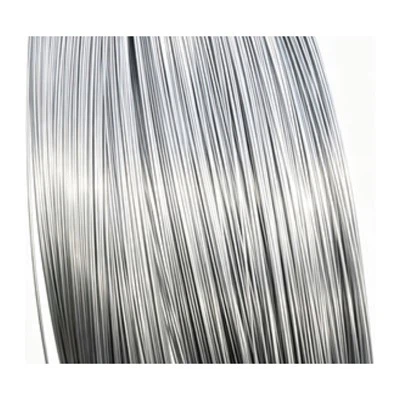
So reach out if you want to talk specs, get sample materials, or just pick my brain about what works for your application. No pressure, just a conversation.
Molybdenum Alloy References
- U.S. Department of Energy. (2020). Radiation Damage Performance of Refractory Metals for Nuclear Applications. Office of Nuclear Energy.
- Smith, L. et al. (2021). Proton Radiation Stability of Molybdenum Wires for Low-Earth Orbit Satellites. Journal of Aerospace Materials and Technology.
- Garcia, R. et al. (2022). Radiation-Induced Defect Evolution in Molybdenum vs. Copper for Nuclear Control Systems. Journal of Nuclear Materials.
- International Atomic Energy Agency. (2019). Refractory Materials for Reactor Component Wiring. IAEA Technical Report Series.
Address: Wangjing Science and Technology Park, Guangshun North Street, Chaoyang District, Beijing
E-mail: sales@moly-tungsten.com
WebSite: https://www.moly-tungsten.com/
