Hey folks, if you’ve ever stood near a power substation and wondered how all that humungous, high-voltage gear keeps from blowing a fuse when the grid throws a fit—let’s talk circuit breakers. As a guy who’s been in the high-voltage circuit breaker supply game for over a decade, I’m here to cut through the engineering jargon and break down what’s actually new and game-changing right now, no stuffy whitepaper vibes. High-voltage Circuit Breaker
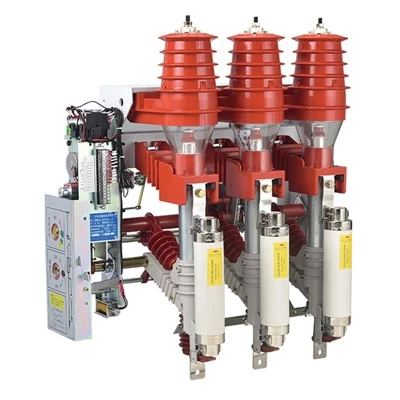
First off, let’s get one thing straight: high-voltage breakers aren’t your grandma’s toggle switch. These things are the grid’s bodyguards—when a fault hits (like a lightning strike taking out a line, or a tree falling on a transformer), they have to cut power in microseconds, no room for error. For years, we’ve relied on old workhorses: oil, SF6 gas, even vacuum breakers that worked but had their kinks. Now? The tech is blowing up, and most of it’s focused on two big things: ditching harmful stuff and being way smarter about grid chaos.
Let’s start with the biggest shake-up lately: SF6-free breakers. If you don’t know, SF6 (sulfur hexafluoride) is the old go-to insulation and arc-quenching gas. It’s super effective at putting out arcs, but it’s like 23,500 times more potent than CO2 as a greenhouse gas. Yikes, right? Regulators are cracking down on it hard, so everyone’s racing to replace it. The latest here isn’t just swapping for another gas—we’re using stuff like C4-perfluoronitrile (wait, we call it c-PFN for short around the shop) and even clean air mixtures. Our team tested a 145-kilovolt c-PFN breaker last year and it crushed the SF6 version in arc-quench speed—like, 10% faster, and no greenhouse guilt. The only catch? Early on, c-PFN was pricey, but mass production has cut costs by 40% in the last two years. Utility clients are flipping for it because they’re hitting carbon targets now, not in 10 years.
Then there’s solid insulation tech, which is wild. Instead of gas or oil, these breakers use epoxy or other polymer solids to insulate parts and quench arcs. No gas leaks, no oil spills—perfect for remote substation sites where maintenance is a nightmare. I saw a 525-kV solid-breaker prototype at a grid conference last quarter that’s half the size of a traditional SF6 breaker. Smaller means less real estate, which is huge because a lot of old substations are running out of room. The only thing holding them back is long-term durability—we’ve only been testing them for 5 years, vs. SF6’s 50+ year track record. But we’re putting them through extreme heat and cold cycles here in our lab, and so far, they’re holding up. We’re launching a small-scale solid breaker line next year for rural grids, and the early pre-orders are insane.
Now, the smart part—digital breakers, or as we call ’em at the shop, “breakers with a brain.” This isn’t just slapping a sensor on a switch. Latest gen breakers have built-in IoT sensors that track every little thing: how much voltage they’re carrying, when the contacts wear out, even tiny gas leaks before they turn into big problems. One utility we work with used a digital breaker last month that detected a contact wear issue 3 months before it would’ve failed, and swapped it out during a planned maintenance window—no unplanned blackouts, which saves them millions. The new trick here is AI integrated right into the breaker, not just a cloud app. So it can analyze faults in milliseconds, not have to wait to send data to a server somewhere. We’re working on a 220-kV smart breaker that can prioritize which faults to cut first—like, if a fault hits two lines, it’ll keep power to hospitals or residential areas before cutting a commercial warehouse. That’s a game-changer for reliability, especially as more people work from home and depend on constant power.
Wait, can’t talk new tech without touching vacuum breakers, which were around but not for super high voltage until recently. Old vacuum breakers maxed out at like 72 kV, but new ones with upgraded contact materials (we use copper-chromium alloys with a tiny bit of tungsten now) are hitting 550 kV. They’re lighter, simpler, no gas, and last longer because the contacts erode slower. We actually just installed a 400-kV vacuum breaker at a solar farm in Arizona a couple months back, and the maintenance team says it’s way easier to work on than the old SF6 ones. Solar and wind farms love ’em because they have to handle variable power flow, and vacuum breakers are way faster at adapting to sudden changes.
Now, let’s be real—no tech is perfect, and there’s still stuff we’re ironing out. For example, the c-PFN breakers I mentioned earlier—they’re great, but if they fail, handling the gas is trickier than SF6, since it’s a little toxic in high concentrations. We’re training our service teams and client staff on that, and the new breakers have built-in leak containment, so it’s way less of a risk. Solid insulation breakers? They’re awesome for small sites, but for ultra-high voltage (like 800 kV for long-distance transmission), we’re still waiting for the right material that can handle the heat and stress without cracking over decades.
Another thing everyone’s buzzing about is modular breakers. Back in the day, you had to order a whole custom breaker for each substation—if you needed a tiny upgrade, you had to replace half the unit. Now, modular tech lets you swap out parts like contacts, insulation modules, even smart sensors without replacing the whole breaker. That cuts down on downtime and costs by like 30% for utilities. We just rolled out our first modular line, and a big Texas utility bought 12 of ’em for their expansion—said they’ll save them $200k over 10 years on maintenance alone.
Here’s why this matters for anyone who cares about the grid (or gets their power from it): these new technologies aren’t just for engineers. They mean fewer blackouts, less harm to the planet, and cheaper long-term power for everyone. Old breakers would often leave you in the dark for hours when a storm hit; new smart ones can isolate the fault in seconds and keep the lights on for most people.
At the end of the day, we’re not just selling parts—we’re helping build a grid that can handle everything from more renewable energy to electric cars powering millions of homes. If you’re a utility manager, substation designer, or even just someone who’s tired of rolling blackouts, I’m here to chat. We can walk through which new breaker tech fits your site, whether you need a small solid breaker for a rural grid or a big smart SF6-free unit for a urban substation. Just reach out to our team to start a conversation about what your project needs.
High Voltage Disconnector References:
- International Electrotechnical Commission. (2023). High-Voltage Circuit Breaker Technology Roadmap: SF6 Alternatives and Digitalization. IEC Press.
- U.S. Department of Energy. (2022). Advanced Grid Technologies: High-Voltage Circuit Breaker Innovations for Renewable Integration. DOE Office of Energy Efficiency & Renewable Energy.
- CIGRE Study Committee A3. (2024). Solid Insulation and Modular High-Voltage Circuit Breakers: Field Experience and Future Outlook. CIGRE Technical Brochure 927.
- IEEE Power & Energy Society. (2023). IoT-Enabled Smart Circuit Breakers for Grid Reliability. IEEE Transactions on Power Delivery, Vol. 38, No. 4.
Zhongtai Electric Power Technology Co., Ltd.
With abundant experience, we are one of the most professional high-voltage circuit breaker manufacturers and suppliers in China. We warmly welcome you to wholesale bulk customized high-voltage circuit breaker from our factory. If you have any enquiry about quotation, please feel free to email us.
Address: High-tech Industrial Park, Chongren County, Fuzhou City, Jiangxi Province (No. 261 Yingbin Avenue)
E-mail: info@zhongtaielectric.com
WebSite: https://www.zhongtaipower.com/
