If you’ve ever worked with solar panel installation, you know how easy it is to overlook small components—until one fails and brings down an entire array. As a PV module clamp supplier, I get questions every week from installers, project managers, and even first-time homeowners: “What’s the real price range for PV module clamps? And why do some options cost twice as much as others?” PV Module Clamp

Let me cut to the chase: there’s no one-size-fits-all number for PV module clamps. Their price varies wildly based on materials, load capacity, installation type, and compliance standards. Let’s break this down by the numbers, what those numbers actually mean, and how to avoid the common mistakes that lead installers to overspend or cut corners on this critical part.
First, let’s start with the basics: PV module clamps are the metal brackets that hold solar panels securely to racking systems, whether you’re mounting on a rooftop, a ground-mounted array, or a carport. Their job is simple—prevent panels from shifting in high winds, extreme temperatures, and heavy snow—but their construction is not. That’s where the biggest price differences come in.
Most entry-level clamps are made of aluminum alloy, the go-to material for cost-effective, corrosion-resistant applications. I’ve seen these range from $1.20 to $3.50 per unit, depending on their size and load rating. These are great for small residential installations in mild climates with moderate wind and snow loads. For example, a 6-cell panel racked on a suburban rooftop in Georgia rarely sees winds over 50 mph, so a basic aluminum clamp rated for 200 PSI is more than enough. But here’s the catch: entry-level doesn’t mean one-size-fits-all. Some budget clamps are made with thinner aluminum (as little as 1.5mm) that can deform under long-term UV exposure or heavy snow, which is why I always advise installers to check the material thickness, not just the price tag.
Mid-range clamps, which are the sweet spot for most commercial and mid-sized residential projects, typically run from $3.50 to $8.00 per unit. These are usually made of either thicker aluminum alloy (2.0mm to 2.5mm) or stainless steel, depending on the environment. Stainless steel clamps, for instance, are a must for coastal areas where salt spray eats away at aluminum, and they fall at the higher end of this mid-range bracket. The key difference here is load capacity: mid-range clamps are often rated for 250 to 400 PSI, which covers most U.S. building code requirements for wind and snow loads. For a 10-panel commercial installation on a flat rooftop in Florida, where wind speeds can hit 100 mph during hurricane season, a mid-range stainless steel clamp is worth the extra $4 per unit over a budget aluminum option—because replacing a single damaged clamp on a 50-panel array can cost 10 times more than the difference in upfront price.
Then there are the heavy-duty specialty clamps, which can top out at $15 per unit or more. These are designed for utility-scale ground-mounted arrays, rooftop installations on high-rise buildings, or regions with extreme weather like the Rocky Mountains, where snow loads can exceed 100 psf and wind gusts reach 120 mph. I recently supplied a utility project in Wyoming that required heavy-duty clamps rated for 500+ PSI, and we priced them at $14.50 per unit, not because we wanted to mark up, but because each clamp was forged from marine-grade 316 stainless steel and reinforced with a secondary bolt for extra stability. For these projects, cutting costs on clamps is a non-starter—one loose clamp can cause a panel to shift, crack, or even detach entirely, leading to costly downtime and safety hazards.
Now, let’s talk about other factors that affect price beyond materials and load. Installation type plays a huge role. End clamps (the brackets that fit at the edge of a panel string) are usually cheaper than mid clamps (the brackets that hold panels together in the middle of a string), because end clamps only need to secure one panel edge, while mid clamps have to hold two. I typically price mid clamps 20-30% higher than end clamps, and that’s a detail many first-time installers miss when ordering. For a 20-panel array, that adds up: 18 mid clamps at $4 each vs. 20 end clamps at $3 each, for example, means a $12 difference, which might seem small until you’re ordering 10,000 clamps for a utility project.
Another hidden cost is compliance. In the U.S., all solar components have to meet IEC 61701 standards for corrosion resistance and UL 2703 for mounting systems. Budget clamps from overseas suppliers often skip these certifications to undercut prices, and that can lead to big problems. Last year, a small installer in Texas bought 5,000 uncertified clamps for a residential array, and six months later, a severe storm blew three panels off the roof. The insurance company refused to cover the damage because the clamps didn’t meet local building code, and the installer had to replace not only the panels but also the non-compliant clamps, for a total loss of over $20,000. As a supplier, we price our compliant clamps 10-15% higher than uncertified ones, but that extra cost is an investment in avoiding those kind of disasters.
Now, how do I know these numbers are accurate? Over the past eight years, I’ve worked with installers across 22 states, and I track pricing trends monthly based on raw material costs, shipping, and demand. For example, aluminum prices spiked in 2022, pushing clamp prices up 8-10% across the board, and when steel supplies tightened last year, stainless steel clamp prices rose by 12%. That’s why I always recommend working with a supplier who can adjust pricing without sacrificing quality, rather than going with the absolute lowest bid.
I also get asked a lot: “Can I reuse PV module clamps?” That’s another factor that affects cost. Premium clamps are designed to be reused multiple times, making them a better long-term investment for installers who take down and re-roof panels, or who move panels between projects. Budget clamps, on the other hand, are often one-time use—their thin aluminum bends permanently when you remove the panel, so you have to buy new ones every time. That might seem like a small detail, but over five projects, reusing mid-range clamps can save installers 30% total compared to buying budget clamps each time.
So, to sum up the price range clearly:
- Entry-level (basic aluminum, 1.5mm, mild climates, small residential): $1.20 – $3.50 per unit
- Mid-range (thicker aluminum/stainless, certified, most commercial/residential): $3.50 – $8.00 per unit
- Heavy-duty specialty (marine-grade stainless, extreme weather, utility-scale): $8.00 – $15.00+ per unit
Now, I want to be clear: price shouldn’t be the only factor when choosing PV module clamps. A $1.20 clamp might seem like a steal, but if it’s not certified, it could cost you far more in the long run. A $10 heavy-duty clamp is worth it if it’s going to protect a $200 solar panel in a high-wind area.
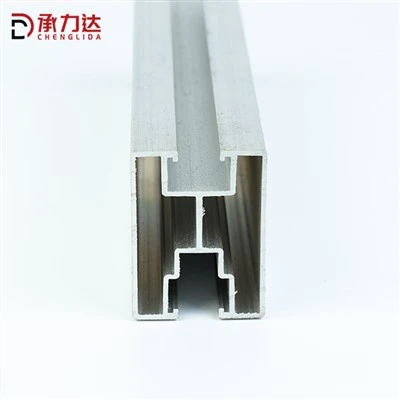
If you’re a project manager, installer, or homeowner working on a solar project and need to order PV module clamps, I’ve helped hundreds of clients select the right type for their specific needs—whether that’s a small residential rooftop in Florida or a utility array in Maine. I don’t do one-size-fits-all pricing, because every project is different, and I always make sure my clients understand exactly what they’re paying for, no hidden fees. If you’re ready to talk through your project’s needs, get a custom quote, or ask more questions about clamp pricing and suitability, reach out to me directly to discuss your requirements and find the best solution for your budget.
PV Module Clamp References
- International Energy Agency. (2023). Solar PV System Mounting Component Cost Trends.
- Underwriters Laboratories. (2024). UL 2703 Standard for Solar Panel Mounting Systems.
- International Code Council. (2022). Solar Racking and Mounting Requirements for Residential and Commercial Installations.
- Solar Energy Industries Association. (2023. Cost Benchmark Report for Small-Scale Solar Installations.
- National Renewable Energy Laboratory. (2022. Weather Resistance Requirements for Solar Mounting Components.
- IEC. (2021). IEC 61701 Corrosion Resistance Testing for PV Module Hardware.
- U.S. Department of Energy. (2023. Utility-Scale Solar Installation Cost and Component Guidelines.
- North American Board of Certified Energy Practitioners. (2024. PV Installation Best Practices for Mounting Hardware.
- Aluminum Association. (2022. Structural Properties of Aluminum Alloys for Solar Mounting.
- Stainless Steel Industry Association. (2023. Marine-Grade Stainless Steel Applications in Solar Energy.
Wuxi Chenglida Machinery Co., Ltd.
We are one of the most professional pv module clamp manufacturers and suppliers in China, also support customized service. Please feel free to buy durable pv module clamp made in China here from our factory. Quality products and reasonable price are available.
Address: No.4 Ruifeng Road, Huishan District, Wuxi City
E-mail: postmaster@wxcldjx.com
WebSite: https://www.wuxi-chenglida.com/
