If you’ve ever dug into how nuclear power actually works (or even binged a few random documentaries on it), you’ve probably heard words like “nuclear fission” and “chain reaction” tossed around. But what you might not know is that one super underrated piece of the puzzle—graphite rods—are actually make-or-break for a ton of nuclear facilities out there. As a graphite rod supplier, I talk to nuclear engineers and plant techs all the time, and let me tell you, most people outside the industry have no clue how many different ways these little carbon rods show up in nuclear operations. Let’s break this down, no stuffy textbook talk, just real, on-the-ground use cases. Graphite Rod
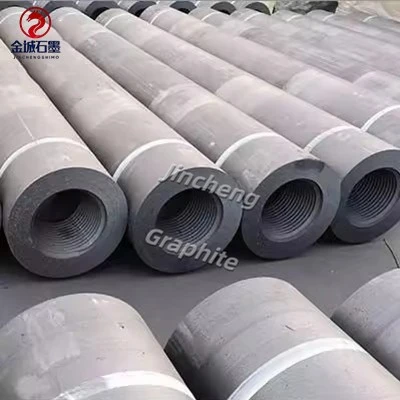
First off, let’s get one thing straight early on: not all graphite is created equal for nuclear work. The rods we supply are ultra-pure—no random impurities that could mess with neutron flow, no weird metals that’d corrode under extreme heat and radiation. That purity is non-negotiable, because in a nuclear reactor, every tiny variable matters. Now, let’s jump into the biggest application most people know about, but don’t fully get: moderator rods in graphite-moderated reactors.
Graphite moderators have been around since the earliest days of nuclear power, right? Think the iconic Magnox reactors that powered the UK for decades, or the RBMK reactors that we all learned about in 101 nuclear safety (you know, the ones that make headlines for safety, not efficiency). Here’s how they work: when a uranium atom splits (fissions), it spits out super-fast neutrons—way too fast to hit other uranium atoms and keep the chain reaction going. We need to slow those neutrons down, and that’s where graphite comes in. When a fast neutron zips through a graphite rod, it bounces off the carbon atoms in the graphite, losing a ton of energy each time, until it’s slow enough to trigger another fission.
Wait, but why graphite specifically? Why not another material like water? Well, water works too, but graphite has some perks. For one, it can handle way higher temperatures without boiling or breaking down, which means graphite-moderated reactors can run at higher efficiency and even use less enriched uranium (a big cost saver for plants). And yeah, in case you’re wondering—no, the graphite rods don’t “react” like fuel rods. They’re just the middlemen, the neutron traffic cops keeping the chain reaction going steady. I’ve had clients tell me they go through thousands of these rods over a reactor’s 40+ year lifespan, replacing ones that get chipped or show signs of radiation damage. That’s a consistent, real demand right there.
Next up, and this is one that’s way less talked about: graphite rods as reflectors. Some reactors don’t just use graphite as the main moderator—they line the core with graphite rods that act as a neutron reflector. Here’s what that means: neutrons that would’ve escaped the reactor core and been wasted (or even posed a small radiation hazard) bounce off these outer graphite rods and get sent back into the core, where they can do their job triggering fission. It’s like wrapping your core in a tiny, super effective radiation blanket. This not only makes the reactor more efficient (you don’t waste neutrons!) but also reduces the amount of fuel you need, which cuts down on operating costs. I’ve worked with a few small modular reactor (SMR) startups lately that are leaning hard on reflector graphite because it simplifies their design and makes their reactors safer. They love that our rods are precision-cut to fit their core’s exact dimensions—no extra bulk, no gaps that neutrons can slip through.
Now, let’s get into something a bit more behind-the-scenes, but critical for maintenance and refueling: control rods? Wait, hold up—no, control rods are usually made of boron or cadmium, but wait a second—graphite is used in control rod guides! Oh right, those long tubes that the control rods slide up and down in to adjust the reaction speed. They need to be super smooth, radiation-resistant, and able to handle extreme heat, and graphite is perfect for that. Because graphite is self-lubricating, right? So when control rods move up and down to speed up or slow down the chain reaction, they don’t get stuck in the guides. If a control rod got stuck, that could be a huge safety issue—you either can’t shut the reactor down fast enough or can’t adjust power levels. So graphite guides are non-negotiable here. We supply a lot of those guide tubes too, not just the solid moderator rods. A lot of first-time clients don’t realize we make both, which saves them time sourcing from multiple vendors.
Another big one: graphite rods in reactor core supports and structural components. Wait, reactors operate at super high temps—like 300-1000°C, sometimes even higher for advanced reactors. Most metals would corrode, warp, or melt in those conditions, but graphite? It’s stable at those temps (as long as there’s no oxygen, which there isn’t in a reactor core). So graphite rods are used as supports for fuel assemblies, holding them in place so they don’t shift around and cause hot spots. They also act as spacers between fuel rods, preventing them from touching each other (which could cause a short or a meltdown risk). And since graphite is lightweight compared to steel or other metals, it doesn’t add extra stress to the reactor’s internal parts. I had a client last year who was upgrading an old Magnox reactor and needed custom-length graphite support rods—they said the original ones were 50 years old and starting to crack from radiation damage, so they needed a precise replacement that matched the original specs. That’s the kind of work we do every day.
Now, let’s talk about emerging nuclear tech, because that’s where the graphite rod demand is really growing. Advanced reactors, like high-temperature gas-cooled reactors (HTGRs) and pebble-bed reactors, rely almost entirely on graphite. In HTGRs, the fuel is mixed with graphite particles and coated in a ceramic, and the core is a massive block of graphite—essentially, the entire structure is built around graphite components, including rods that help circulate the helium coolant (helium doesn’t absorb neutrons, so it doesn’t mess with the reaction) and support the fuel pebbles. Pebble-bed reactors use graphite spheres as fuel carriers, but they also use solid graphite rods for moderation and structural support. Even small modular reactors (SMRs) that are being rolled out to replace older, bigger plants are leaning on graphite because it’s easier to manufacture, transport, and install than metal components for small cores.
Wait, but what about radiation damage? I know that’s a big concern for a lot of plant operators. When graphite is exposed to high levels of neutron radiation, it can get a bit “damaged”—the carbon atoms get displaced, and the material can shrink or expand a tiny bit. But modern nuclear-grade graphite is engineered to handle that. The rods we supply have a specific grain structure and purity level that minimizes radiation-induced distortion, so they last the full lifespan of a reactor core. We test every batch we send out for radiation resistance and purity, because one bad rod can cause a whole lot of issues down the line. I’ve had clients send back samples for independent testing, and 9 times out of 10, our graphite passes with flying colors—something that’s super important in an industry where trust is everything.
Let’s also touch on decommissioning and waste handling, because graphite rods show up there too. When a reactor reaches the end of its 40-60 year lifespan, operators have to take it apart safely. The moderator and reflector graphite rods are radioactive, but they’re also stable, which makes them easier to handle than other radioactive components. They’re usually stored in special casks until their radioactivity drops to safe levels, which is way more manageable than, say, melted metal parts. Some operators even repurpose graphite rods for other nuclear projects, like research reactors or SMRs, since their radiation damage levels are often low enough to be reused. That’s a win-win—less waste, and less cost for new materials.
Now, as someone who’s been in the graphite rod supply game for years, I’ll be real with you: this industry moves slow. Nuclear facilities don’t just switch suppliers overnight—they test, vet, and requalify vendors for years. But that also means the demand is steady, and it’s growing as more countries invest in nuclear power to hit net-zero goals. Countries like the US, UK, France, and even newer players like Poland are ramping up their nuclear fleets, and all of them need reliable graphite rod suppliers that can deliver high-purity, custom parts on time.
A lot of people ask me, “Why should I go with your graphite rods instead of another supplier?” Well, it’s not just about the product. We’ve been working with nuclear operators for decades, so we understand the strict standards—we know that even a 0.1% impurity in graphite can mess with neutron flow, so we test every single batch. We can make rods in custom lengths, diameters, and grain structures, whether you need standard replacement parts for an old Magnox reactor or custom components for a next-gen SMR. And we stand behind every rod we send—we know how critical these parts are, so we don’t cut corners on quality.

If you’re a nuclear engineer, plant manager, or part of a nuclear project team, and you need reliable nuclear-grade graphite rods—whether for moderators, reflectors, guides, supports, or any other application—we’re here to help. We can send you sample parts, answer any questions you have about specs, purity, or delivery times, and work with your team to make sure you get exactly what you need, when you need it. No hoops to jump through, no stuffy sales pitches, just real support for your nuclear projects.
Carbon Fiber Composite Plate References:
- International Atomic Energy Agency. (2020). Graphite Properties and Applications in Nuclear Reactors. IAEA Nuclear Energy Series.
- United States Nuclear Regulatory Commission. (2018). Materials Aging in Graphite-Moderated Reactors. NRC Report NUREG/CR-7120.
- OECD Nuclear Energy Agency. (2021). Advanced Graphite Applications in Next-Generation Nuclear Systems. NEA Report No. 7952.
- Magnox Electric plc. (2019). Decommissioning of Graphite Moderated Reactors: Key Lessons Learned. Nuclear Engineering International.
Huixian Jincheng Abrasive Mold Factory
As one of the most professional graphite rod manufacturers and suppliers in China, we have world-leading production equipment and strong manufacturing capabilities. Please rest assured to buy durable graphite rod for sale here from our factory. Quality products and reasonable price are available.
Address: Mengzhuang Town, Huixian City, Henan Province
E-mail: graphite.jc@gmail.com
WebSite: https://www.graphite-jc.com/
