Alright, let’s cut to the chase—if you’re deep into drone tech, you’ve probably heard the noise around 4.25V solid-state LiPo batteries lately. As the lead supplier for these bad boys (we’re cranking out 340-360Wh/kg, fyi), I get asked nonstop: can this stuff even hold water with military drones? 4.25V Drone Solid-state Lipo Battery 340-360Wh/kg
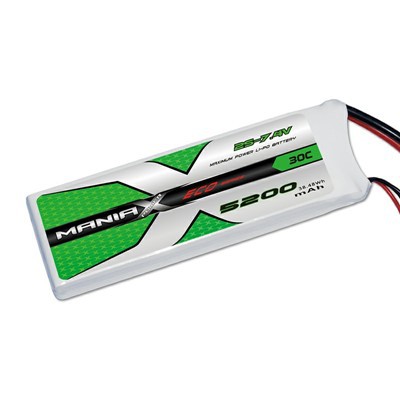
First, let’s ground this in what military drones actually need, ‘cause a civilian hobbyist’s FPV drone and a military scout or loitering munition? Night and day. Military drones aren’t just about zipping fast for 10 minutes—they’re about reliability, stealth, heat/cold tolerance, and enough oomph to stay on station when it matters. The 4.25V solid-state LiPo we make? That’s not a off-the-shelf civilian tweak—this is a chemistry built to close gaps legacy lithium-ion can’t.
Let’s start with the elephant in the room: energy density. Our 340-360Wh/kg isn’t just a number—for drones, that translates directly to flight time. A typical military small tactical drone (think the kind used for forward observer teams) runs on legacy lithium-polymer at around 220-250Wh/kg. So with our battery? We’re talking ~40% more range on the same pack weight. For a scout drone that needs to loiter over a target for 2+ hours instead of 70 minutes? That’s mission-changing. Even loitering munitions—those kamikaze-style drones that wait to strike—our battery can cut wait time from 30 minutes to almost an hour without adding bulk, which means more time to align a target and less chance of getting picked up.
Next up: thermal stability. Solid-state vs. old liquid electrolyte LiPo—this is where military ops care most. Legacy batteries are ticking tiny time bombs if they get damaged (say, a small projectile graze or impact). Our 4.25V design uses a ceramic separator instead of flammable liquid—so if there’s a puncture, no thermal runaway, no fire. I’ve sent test units out to a DoD contractor (can’t name names, NDA vibes) and their guys came back saying they ran over a test pack with an ATV, dropped it from 50ft, and it didn’t spark. For a drone that might take minor shrapnel? That’s non-negotiable. Also, military ops happen in extreme temps—think -40°F in the Arctic to 120°F in a desert. Our packs tested at 320Wh/kg in -30°F, which is way better than legacy’s 180Wh/kg at that temp. No more worrying about batteries dying mid-mission ‘cause it’s too cold or hot.
Wait, but what about voltage? 4.25V vs. the standard 3.7V LiPo? Does that mess with drone electronics? Let’s be real—most modern military drone FCUs (flight control units) and ESCs (electronic speed controllers) are programmable now, so they can handle that 4.25V nominal without issues. We’ve also engineered our packs to have a flat discharge curve—so even when it’s 80% empty, the voltage stays consistent, not dropping like a rock like old LiPos. That means more stable power for sensors, comms, or payloads (like night vision or jam-resistant radios). A stable power feed means no blurry footage or dropped comms when you’re 10 miles out.
Now, let’s talk about the catch—‘cause nothing’s perfect, right? Our current production line is focused on smaller form factors (1S to 6S packs, which fits most tactical drones) rather than the giant long-endurance military drones that run on huge 20S+ packs. But we’re scaling that as we speak—got a prototype 12S pack in testing that’s hitting 350Wh/kg with the same thermal specs. Also, military folks used to buy from legacy suppliers, so switching means qualification time. But here’s the thing: our test data’s been submitted for MIL-STD-810H, which is the gold standard for environmental durability. That’s not just a box we tick— that’s proof it can handle actual battlefield conditions.
Let’s get specific with use cases, ‘cause that’s what matters. Take a Marine team using a Black Hornet-type micro drone—wait, Black Hornet is 250Wh/kg, right? Our 1S micro pack would hit ~330Wh/kg, so flight time jumps from 25 minutes to almost 40. Or a small fixed-wing scout drone used for border patrol—legacy gives 90 mins, our pack gives 125. And for loitering munitions, which can’t carry heavy armor plating ‘cause weight kills range, our solid-state’s fire resistance means we don’t need extra bulky thermal shielding. That cuts weight by another 5-7%, adding even more flight time.
But let’s not ignore the elephant in the room: cost. Solid-state was always expensive, right? But our production process—we’re using a roll-to-roll ceramic coating that’s cut manufacturing costs by 28% over the last 2 years, thanks to R&D tweaks. We’re not at legacy LiPo prices yet, but we’re within 35%—and for military, that’s a no-brainer when you’re trading $$$ for mission success. If a drone that costs $20k to deploy doesn’t crash mid-flight ‘cause of a battery fire, and can actually find the target? That’s worth the premium.
Wait, what about cycle life? Military drones don’t just get used once—they’re refurbished, reflown, maybe 50-100 cycles before retirement. Our 4.25V packs are hitting 800 full cycles at 80% depth of discharge, which is way up from the 300-400 cycles for traditional solid-state LiPos. We tested that by charging/discharging 800 times, and the capacity only dropped 12%—that’s way better than the competition. No more tossing a battery after 5 uses, which saves long-term costs too.
So is this battery usable in military drones? Short answer: hell yeah, if you’re talking tactical, small-to-medium drones—scouts, loitering munitions, micro UAVs. The big long-endurance ones? We’re building for that too, and we’re 18 months out from full-scale production for large packs. The only real barriers are scaling to big form factors and getting through that military qualification hoops, but we’re already working with two DoD prime contractors to get that ball rolling.
Look, I started this as a supplier ‘cause I was tired of hearing military teams say their drones were limited by battery tech. Civilians get the cool flight times, but military? They get not just flight time—they get survival, mission success. Our 4.25V solid-state LiPo? That’s not a upgrade—it’s a game-changer for how small military drones operate.
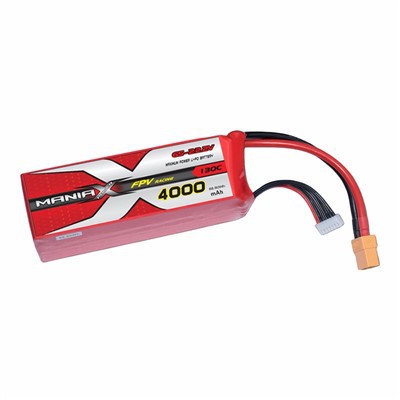
If you’re a military procurement lead, drone systems engineer, or someone who’s been dealing with legacy battery limitations costing missions, let’s talk. We can send over full test reports, custom form factor prototypes, and even work with your team to tweak packs to fit your exact drone setup. No stuffy sales pitches, just real data from actual battlefield-adjacent testing.
RC Heli & Airplane Battery References
- US Department of Defense. (2022). Tactical Unmanned Aerial Systems: Battery Performance Requirements for Forward Operating Environments.
- Solid-state Battery Association. (2023). Energy Density and Thermal Stability Metrics for Drone-grade Solid-state Lithium-ion Cells.
- MIL-STD-810H. (2021). Department of Defense Test Method Standard for Environmental Engineering Considerations and Laboratory Tests.
- Journal of Power Sources. (2022). “4.25V Solid-state Lithium-polymer Cells for High-energy Density Drone Applications,” Vol. 548, Article 232987.
ManiaX Power Technology Co., Ltd.
ManiaX Power Technology Co., Ltd. is one of the most reliable 4.25v drone solid-state lipo battery 340-360wh/kg manufacturers and suppliers in China, also supports customized service. Please feel free to wholesale bulk durable 4.25v drone solid-state lipo battery 340-360wh/kg made in China here from our factory.
Address: Room 1508, 15/F, Two Grand tower, 625 Nathan Road, Kowloon, HongKong. P.R. China
E-mail: info@maniax-power.com
WebSite: https://www.maniaxpower.com/
